


We tested 9 air fryers ranging from around $100 to nearly $400, and if price had anything to do with performance, this should have been a pretty predictable test. It wasn’t. One of the cheapest models finished near the top, one of the most expensive came in dead last, and several air fryers completely changed our minds once we started cooking in them. We tested speed, temperature accuracy, energy use, noise, cleanup, and—most importantly—how well they actually cooked food.
Quick Links to the products mentioned in this post:
- Breville Smart Oven Air Fryer or Amazon
- Chefman 9 Qt
- Cosori Turbo Blaze
- Emeril French Door or Amazon
- Kismile AeroLucen 5 QT or Amazon
- Ninja Air Fryer Pro or Amazon
- Ninja Crispi Pro or Amazon or SharkNinja
- Typhur Dome 2 (Use code THEBBQLAB to save 10%) or Amazon
- Typhur Sync air fryer (Use code THEBBQLAB to save 10%) or Amazon
- Feathered Formula Chicken Rub
I’m David Gafford, and welcome to The Barbecue Lab, where Melissa and I test all the gear in outdoor cooking… and sometimes indoor cooking, because here in the midwest, winter is coming. Today we’re finding out which air fryer is actually worth buying.
Before we get started, here’s our disclaimer: A few of these air fryers were supplied by the manufacturers for previous content, but most of them were purchased by us. No brands have given us notes, and most of them have no clue we’re even doing this. We’re just going to let the tests and the data speak for themselves. So with that, let me introduce you to the models we’re testing.
Best Air Fryer Candidates

The Chefman 9-quart air fryer has a regular price of $120 and a temperature range of 90-450°, with 6 presets and a warm feature. The Chefman also has a window in the basket so you can watch your food while it cooks.
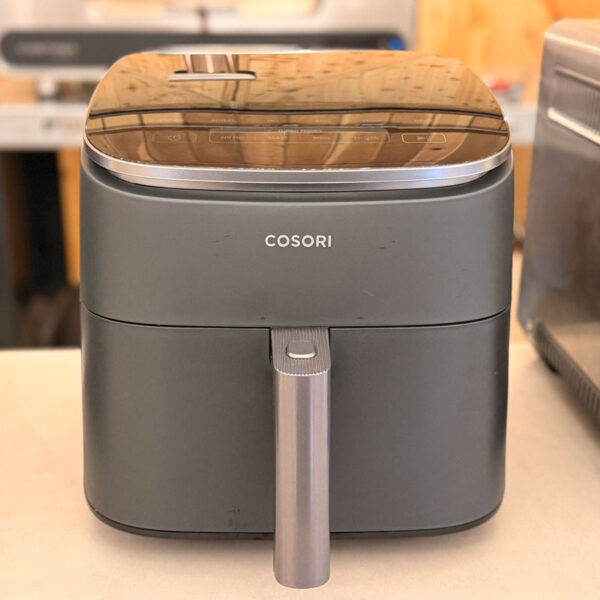
The 6-quart Cosori TurboBlaze also has a regular price of $120. It has the exact same temperature range as the Chefman, with an additional 2 presets.
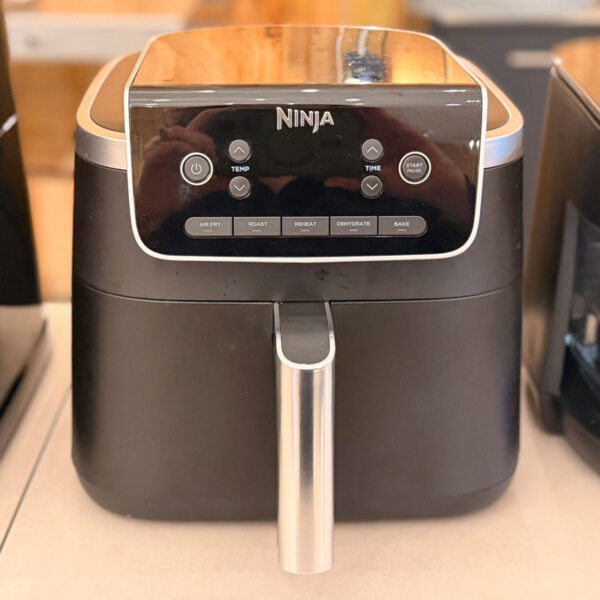
For $20 more, the Ninja Air Fryer Pro has a capacity of 5 quarts at the regular price of $140. It has 5 cooking presets and a temperature range of 80-400°F.
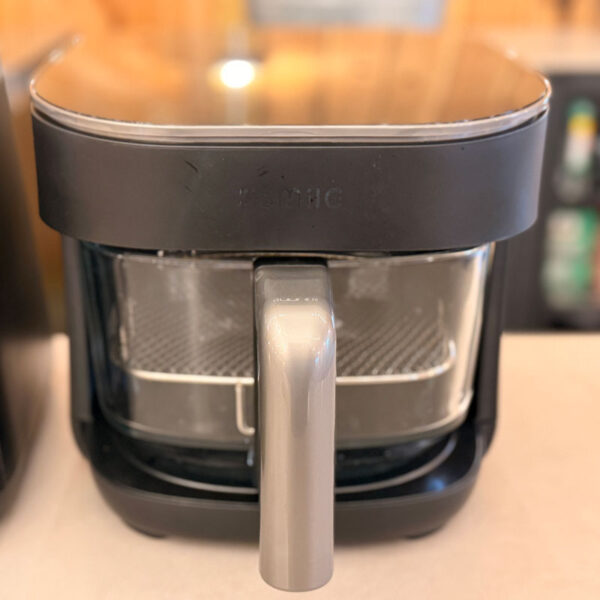
The Kismile AeroLucen 5-quart Glass Air Fryer has a regular price of $160. It has a temperature range of 90–450°F and 5 cooking presets.
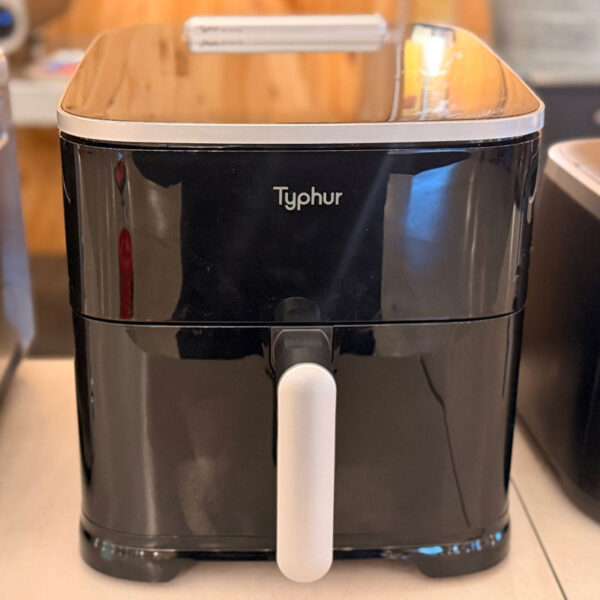
With a regular price of $199, the Typhur Sync air fryer has a capacity of 8 quarts. It has a temperature range of 105–450°F with 6 on-panel presets. The Sync has Wi-Fi capability, and connecting it to the Typhur app unlocks 3 additional presets and a whole lot more, including Smart Whole Chicken Mode. The Sync includes a wireless meat thermometer, which allows you to cook your food to the desired internal temperature, and the air fryer will stop automatically once that target is reached.
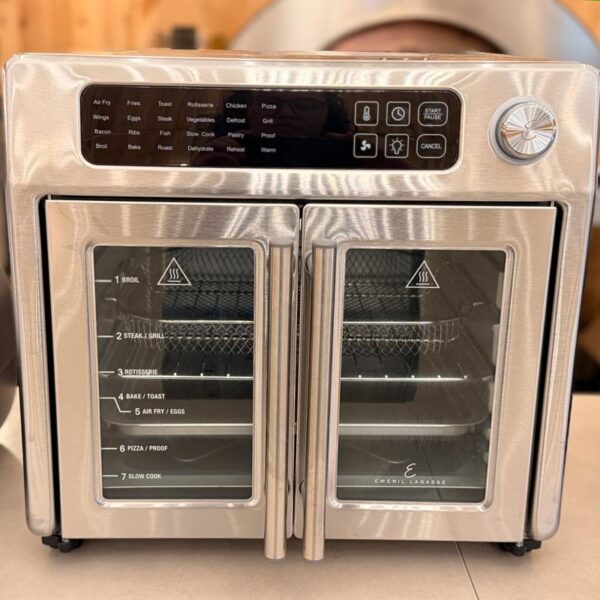
The Emeril Lagasse French Door air fryer toaster oven has a regular price of $210 and a listed capacity of 26 quarts. With a temperature range of 160-450°, it has a whopping 24 cooking presets, including rotisserie. It includes a wire rack, baking pan, crisper tray, rotisserie spit, fetch tool, and grill plate handle. There are 6 different positions available for cooking.
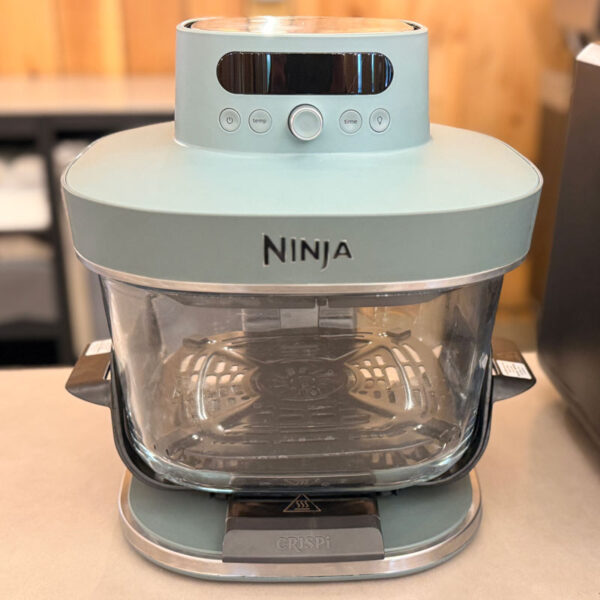
The Ninja Crispi Pro is next, with a regular retail price of $299. It includes both a 6-quart and 2.5-quart glass basket, nonstick crisper plates, and storage lids. With a temperature range of 150-450°, the Ninja Crispi Pro offers 6 cooking presets, along with the ability to enjoy a show while you wait for your dinner.
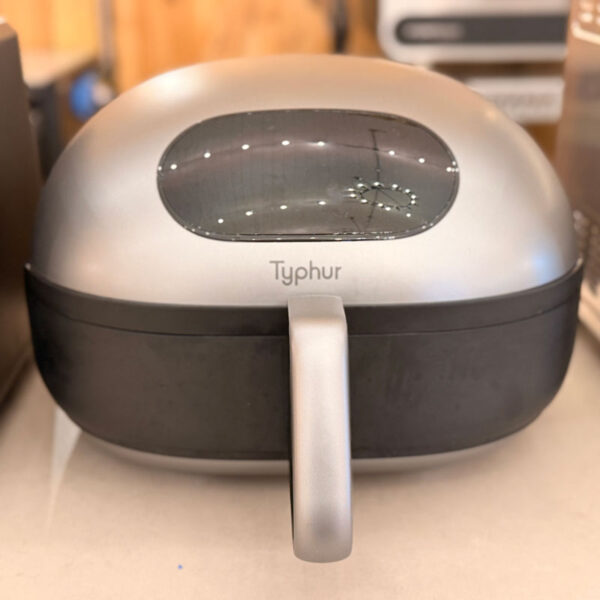
The Typhur Dome 2 is regularly priced $399 and has a capacity of 5.6 quarts. With a temperature range of 105-450°, it has 8 on-panel presets. Like the Sync air fryer, the Dome 2 also has Wi-Fi capability, and the accompanying app unlocks 7 additional presets, as well as a self-cleaning function. The Dome 2 is the only air fryer in this collection that adds a bottom heating element, making presets like “griddle” possible.
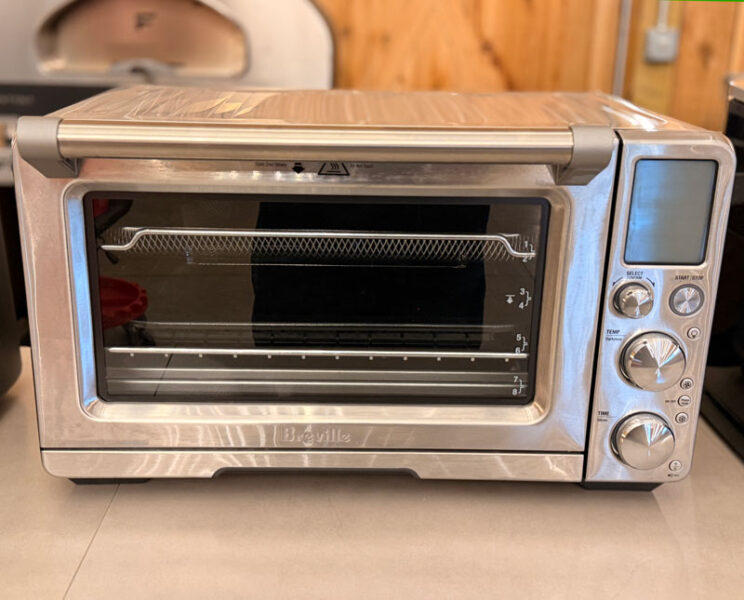
And finally, the Breville Smart Oven Air Fryer has an advertised capacity of 1 cubic foot and a regular price of $399. It has a temperature range of 80-480 °F, with 11 built-in cooking functions. It includes 2 wire racks, an air fry basket, a baking pan, a grilling rack, a pizza pan, and a drip pan. There are 8 different positions at 4 different levels available for cooking.
If you want to explore any of these air fryers further, please use the links below. Prices are always changing, especially this time of year, so to see the current price, as well as to support the channel and help fund future content like this, check out our links.
Quick Links to the products mentioned in this post:
- Breville Smart Oven Air Fryer or Amazon
- Chefman 9 Qt
- Cosori Turbo Blaze
- Emeril French Door or Amazon
- Kismile AeroLucen 5 QT or Amazon
- Ninja Air Fryer Pro or Amazon
- Ninja Crispi Pro or Amazon or SharkNinja
- Typhur Dome 2 (Use code THEBBQLAB to save 10%) or Amazon
- Typhur Sync air fryer (Use code THEBBQLAB to save 10%) or Amazon
- Feathered Formula Chicken Rub
Air Fryer Testing
Heat Up Time
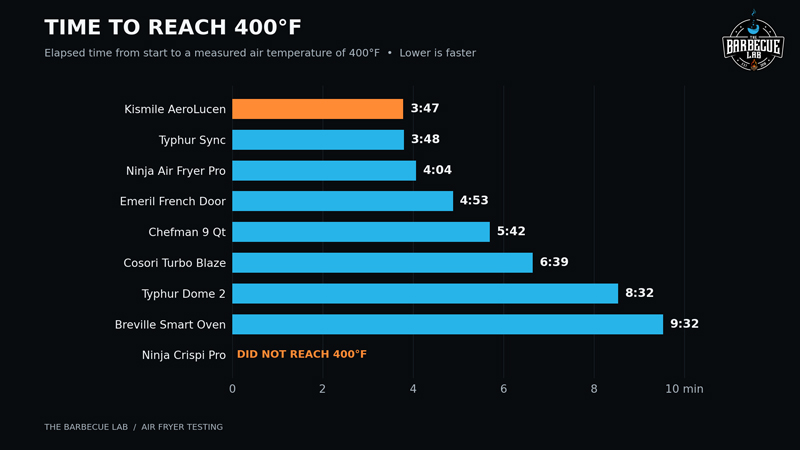
One of the first things we wondered was if there was a difference in how fast these air fryers got up to temperature.
We set each air fryer to 400 degrees, attached a Thermoworks Air Temperature Probe to our Signals 4 channel thermometer and placed it in the center of the basket on a silicone pot clip to keep the tip off the bottom and suspended in the air. We started each one and let the air temperature probe tell us when each model hit 400 degrees.
The Kismile, with it’s small capacity, reached 400 in just 3 minutes and 47 seconds with the Typhur Sync finishing just 1 second behind at 3 minutes and 48 seconds. The Breville finished last in our test at 9 minutes and 32 seconds, but with a much larger area to heat shouldn’t be very surprising. The rest landed somewhere in-between, and you can see the results from fastest to slowest using the chart below.
Getting up to temperature quickly is one thing, but getting there efficiently is another. And one of these air fryers used almost three times as much electricity as our most efficient model. We’ll get to that in just a second, but first let’s look at what they actually consumed over 25 minutes.
Energy Usage
During our time to temperature test, we plugged into an electrical Watt meter so we could measure how much power each model needed to run for 25 minutes at 400 degrees. We measured in kilowatt hours, just like the power company does so we can get a true cost for running each model for 25 minutes.
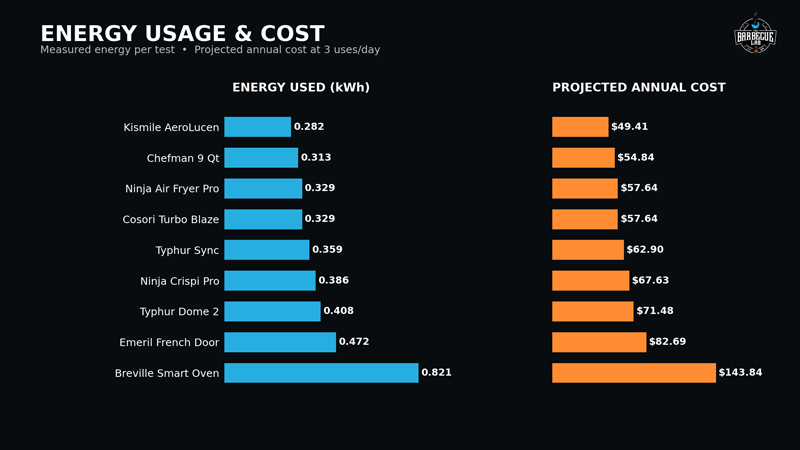
Here’s a chart of how much energy each unit used, and it’s not surprising to see that the smaller air fryers generally used less energy to run at 400 degrees for 25 minutes. The most energy efficient was the Kismile at .282 kilowatts, and just behind was the Chefman at .313. The most energy hungry models were the Emeril Lagasse at .472 and the Breville ,with a whopping .821 Kilowatt hours.
To translate this power consumption into cost for those in the United States, the average cost per Kilowatt hour is around sixteen cents, and you can see in the graph how much it cost to run each one for this test. If you used your air fryer 3 times a day for an entire year at these rates, the numbers start to add up a bit more with the Kismile costing $49 to Breville’s $143 in electricity used.
Temperature Accuracy
We graphed the accuracy of each air fryer using the Thermoworks Signals because it takes that data and uploads it straight to the cloud where we can work with it after the test. We set each air fryer to 400 degrees, and after the time to temperature test, we graphed how each air fryer held 400 degrees.
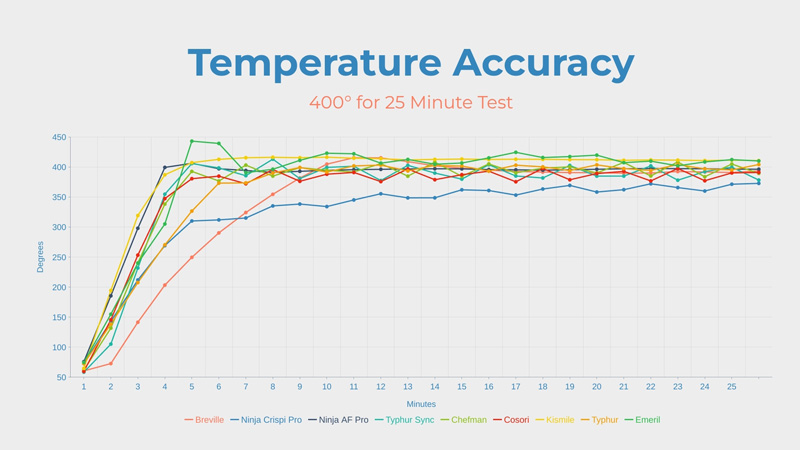
The Breville overshot 400 between the 10-13 minute mark, then settled under for the duration. The Ninja Air Fryer Pro overshot by a small margin, but held rock steady throughout the rest of the test. The Typhur Sync kind of ping ponged its way through the test, as did the Chefman, and also the Cosori, and I found that interesting compared to some of the other air fryers that held almost flat. The Kismile for example resembles a needle thin line a shade above 400 degrees for the entire test. Super impressive.
The Typhur Dome 2 was the closest to a true 400, registering just over once it got up to temperature. The Emeril model overshot by a considerable margin, but hovered over set temperature for the duration. The only air fryer that never got all the way up to 400 degrees was the Ninja Crispi Pro, and I’m willing to throw out this test because of the way the bowl seals to the top and the thermometer cable potentially interfered with the results. We’ll have to come up with another way to test this model in the future.
Air Fryer Cooking Tests
Bacon
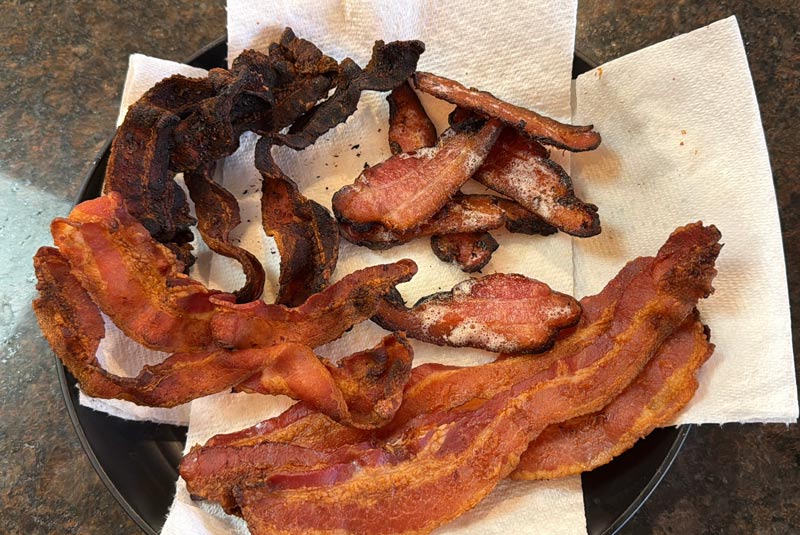
For our bacon test, we ran each air fryer at 400° for 10 minutes without preheating first. We were looking to see how many slices could fit in each basket, whether the slices stayed in place or blew around, and whether they cooked evenly.
LOVED IT
There are 3 air fryers that I would definitely use to cook bacon again.
The Chefman air fryer showed signs of moving the bacon a little, but for the most part, the pieces fit, cooked evenly, and remained relatively straight.
The Typhur Dome 2 easily fit 7 pieces of bacon, keeping them straight and in place without blowing them around, though they did need a couple extra minutes to reach the doneness we prefer.
The Typhur Sync air fryer also understood the assignment. Only 5 slices fit, but they remained in place and were evenly cooked through with a couple extra minutes added.
LIKED IT
Two of the air fryers “kind of” succeeded at making bacon. I say “kind of” because it was still edible; however, I probably wouldn’t choose to use these to cook bacon in the future.
The Cosori showed clear evidence of bacon moving around inside, though some of the pieces remained separate. It cooked fairly evenly, with a few places starting to burn.
The Crispi proved to have a little too aggressive convection for cooking bacon. Though it gave an interesting show while we watched the bacon spin around, I prefer my bacon as individual strips rather than a tangled pile.
FAILED IT
I would consider the last 4 air fryers to have failed the bacon test.
The Ninja Pro smoked considerably during cooking. Though it wasn’t visible like in the Crispi, these slices of bacon obviously experienced the same heat tornado and wound up tangled, burned, and inedible.
The Kismile was the only basket that I had to cut the bacon in half to fit. While the slices stayed in position, they did not cook evenly and were both burned and undercooked at the same time. They actually had a weird taste, and we threw that bacon away. Heartbreaking.
I had high hopes for the Emeril and Breville air fryers since they had the space to spread the bacon slices out, Breville fitting the most of all the air fryers. However, they fell short. First of all, 10 minutes was nowhere near long enough, but then with additional time we battled the same over and under cooked issue we saw in the Kismile. I’m not sure if it’s the metal racks that’s the problem, but those batches of bacon were also a complete disappointment.
Bacon exposed some pretty major airflow problems, but we weren’t ready to write anybody off yet. Chicken wings would give every air fryer another chance; and this time, two surprisingly affordable models produced wings that were about as close to deep fried as we’ve ever gotten from an air fryer.
Crispy Chicken Wings
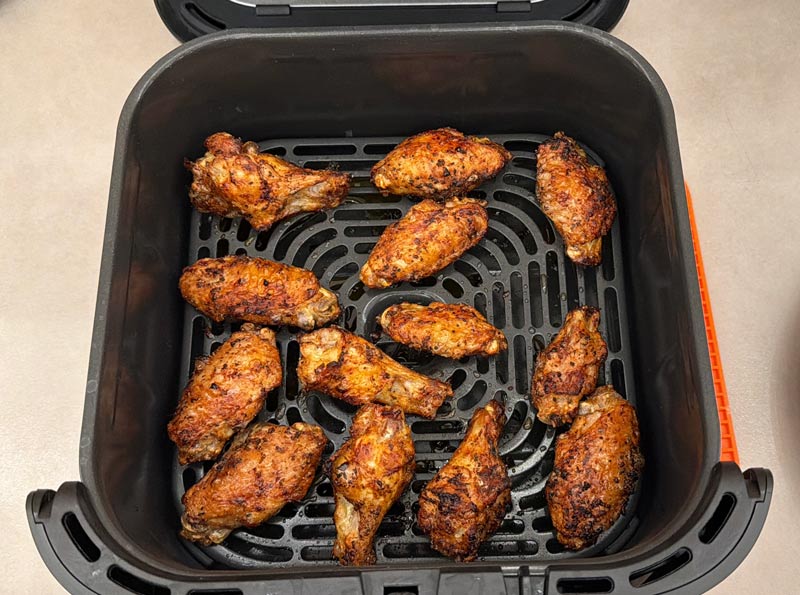
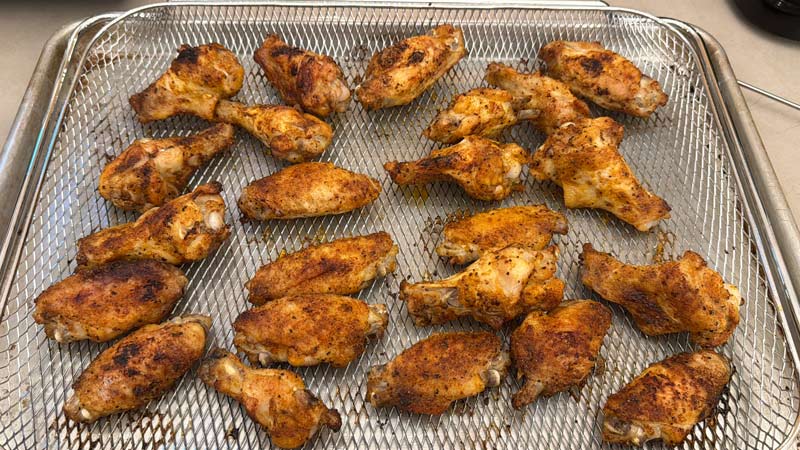
For our chicken wing test, we gave each air fryer a 5-minute preheat at 400° while we seasoned the party wings with our own Feathered Formula seasoning. The wings went in for 10 minutes, were flipped, and then left to cook for 8 more minutes. Again, we were looking to see capacity: how many chicken wings can reasonably fit in a single layer, do they cook evenly, and do they get crispy.
LOVED IT
The Cosori and Chefman produced the best crispy chicken wings of them all. They were crispy on the outside, almost like being deep fried, but moist on the inside. The wings cooked evenly across the baskets with minimal burning of the sugar in the rub.
The Typhur Dome 2 and Ninja Pro were right behind, giving us slightly less crispy, but still moist and delicious wings.
LIKED IT
The Ninja Crispi and Typhur Sync wings were cooked to temperature and moist on the inside, but the skin didn’t get as crispy as we would have liked, while the Kismile air fryer seemed to burn the sugar in the rub more than we saw in the others.
FAILED IT
The wings in the Emeril Lagasse french door air fryer were cooked to the desired temperature, but ended up dry and honestly lacking flavor. The Breville Smart Oven also cooked the wings to the desired temperature but weren’t crispy at all. We moved them to the top shelf and broiled them on high for 2 minutes and only achieved a little crispiness. They were just ok, and were kind of boring to eat.
I’m not sure what it was about this style of air fryer, but the chicken wings just didn’t taste as good as they did in the more traditional style air fryers. Also, we were left with more mess to clean up afterward. Pulling the metal basket out to flip the wings mid-cook resulted in chicken drippings on the oven door and counter.
Brazi Bites
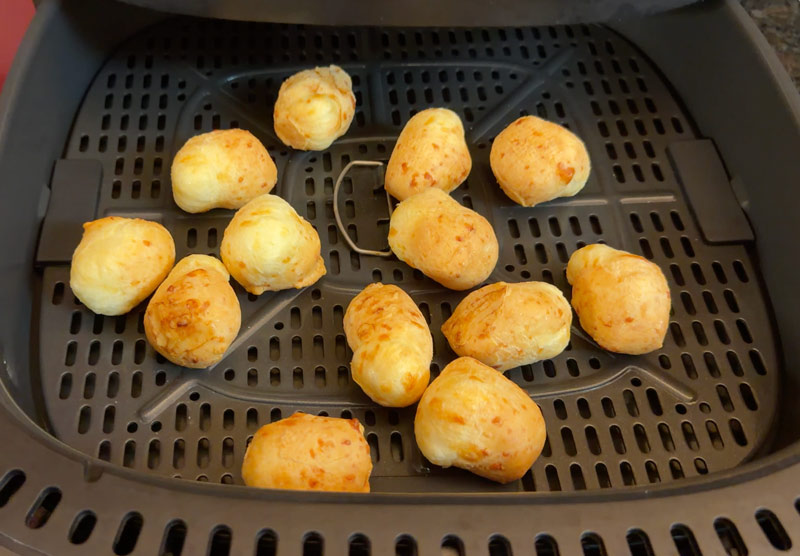
We also cooked a batch of Brazi bites in each air fyer to see how they do cooking a doughy bread. Since our daughter Addy has Celiac disease, this Brazilian cheese bread is a gluten-free option that our kids both love. And it’s a good thing, because we cooked 9 air fryers worth. These went into each air fryer, set to 340° for 15 minutes, and we did not preheat first.
LOVED IT
The Cosori, Typhur Dome 2, and Sync all cooked the Brazi bites beautifully, and we had zero issues with the bread sticking to the crisper plates due to their non stick coating. The Ninja Crispi also had no problem with the bread sticking, as we were able to observe the wind blowing them around during the cook.
The Chefman cooked the bites beautifully, and it proved nonstick for the most part, but one bite took on a mushroom shape, settling into the large hole in the center of the tray. The Brazi bites in the Ninja Pro definitely didn’t stick to the crisper plate, but seemed to have paired up with each other while cooking, from the intense convection inside.
LIKED IT
The Kismile cooked the bites evenly, but they stuck to the metal plate. The Emeril seemed to cook the right side a little more than the left side of the tray, and the bread stuck to the metal. Breville required more time, and the bread stuck to the metal basket.
In hindsight, I probably could have used the roasting pan instead for different results on both of the cabinet-style air fryers.
Chicken Tenders
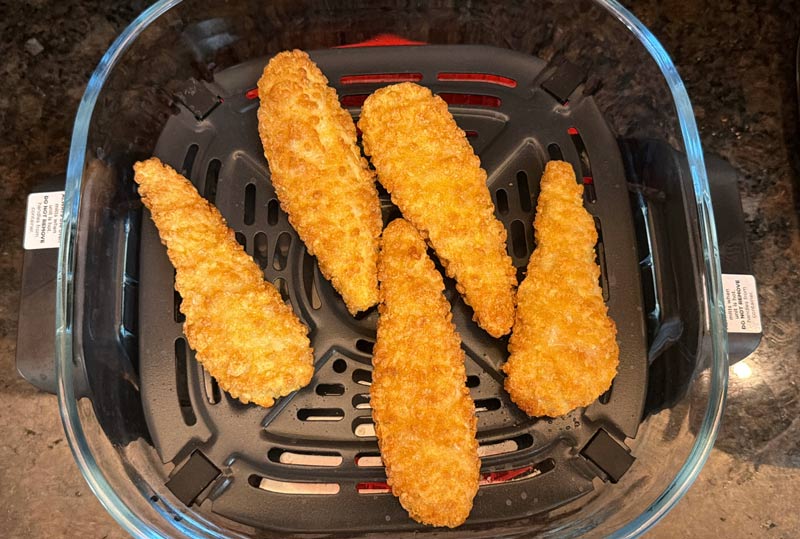
Since frozen convenience foods are probably the most commonly cooked items in air fryers, we had to give chicken nuggets and french fries a turn as well. We cooked up a batch of these Perdue gluten-free chicken tenders for 9 minutes at 350°. Honestly, there wasn’t much to report here. They all did a pretty equal job with the tenders; the only stand out was that the Emeril air fryer required 2 more minutes to get the job done.
Frozen French Fries
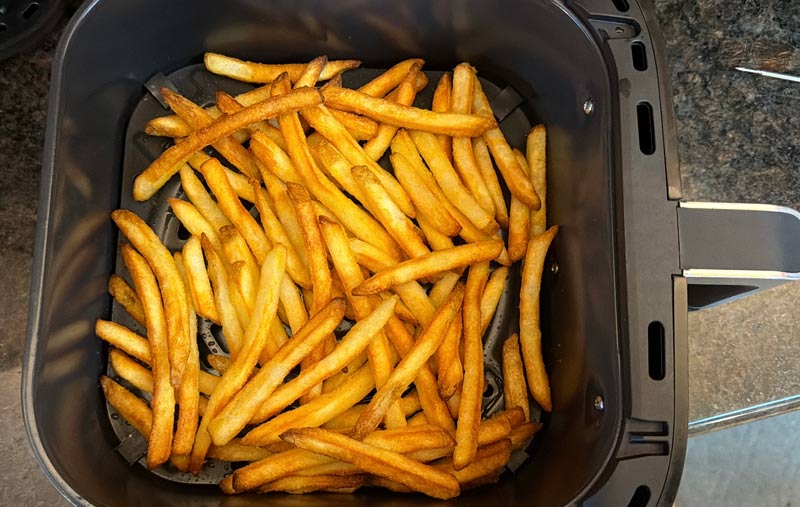
The frozen fries went in each air fryer at 400° for 14 minutes, with no preheat. And like the tenders, there’s not a ton to report. We didn’t fill the baskets very full, so the french fries all cooked pretty evenly.
I would probably say the Chefman, Sync, and Cosori made the tastiest french fries, most like what deep frying the fries would produce. The Ninja Pro probably needed less time, as they were a little over cooked, while the Breville needed more time because they were still on the soft side.
Of course, someone had to eat all this food, and our kids had tenders and crispy fries… for days. And they reported that their favorite chicken tenders came out of the Chefman and favorite french fries came from the Cosori.
At this point we had a pretty good idea which air fryers cooked the best food. But cooking performance isn’t the whole story when an appliance is going to live on your kitchen counter every day. And a few of these had quirks that became much bigger annoyances the longer we used them.
User Experience
In just a minute I’m going to break down the results, but first I want to share a few of our observations when it comes to the user experience.
- We don’t like that the Ninja Crispi requires two hands to use. All of the other basket varieties can be pulled out one-handed, but this being a two-handed deal kind of drives Melissa crazy.
- We like the glass ones or the ones with a glass window, because it’s helpful to be able to see and monitor your cooking progress, but we really don’t like the metal trays. The Kismile, Emeril, and the Breville have these trays, and food seemed to be more likely to be both overcooked and undercooked at the same time, plus they’re a pain to clean.
- The toaster oven “air fryers” seem to be a lot more toaster oven than air fryer. The food tasted oven-cooked as opposed to air-fryer-cooked. The toaster oven ones were messier as well. The mess wasn’t contained as well as with the drawer models, so we were cleaning up more countertop mess than we liked. The all-in-one approach to air fryer and toaster oven makes it a jack of all trades but a master of none. Given the option between one of the toaster oven models and one of the drawer models, we would take the drawer model every time. Let’s let toaster ovens be ovens and air fryers be the fryers of air.
- We really like and appreciate the app that goes along with the Typhur models, and if we ever have questions about a cooking time or temp, the app is super helpful with a huge library of recipes you can send straight to the air fryer.
- Our favorite air fryers are the ones with more width and less depth in the baskets instead of more depth and less width. They offer more cooking space without having to pile food on top of itself.
- As far as presets are concerned, it’s a starting point, but there’s no guarantee, as evidenced in our bacon test. What presets don’t ask is do you like your bacon crispy or floppy? Are you cooking thick-cut bacon or thin-cut bacon? Frozen french fries are the same thing; you have crinkle cut, shoestring, and wedges, and they’re not all going to get cooked the same way. So, take the presets on the control panel with a grain of salt, the same way you’re probably going to want those french fries when they’re done. The more important factor is if there are digital controls that allow you to adjust the temperature and cooking time easily.
How noisy are they?
Nobody likes a noisy air fryer, especially if it’s going to live in the kitchen while the family is hanging about. We measured the loudness with a decibel meter from a couple of feet away, and we discovered quite a range.
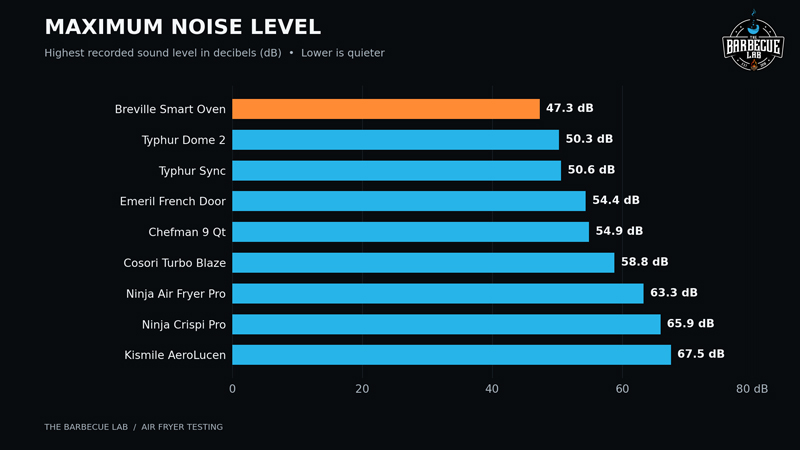
The Breville and both Typhur units easily win this test with results between 47 and 50 decibels while running. For reference, I ran the decibel meter in the same room without anything running, and the meter gave me 35 – 38 decibels. The Breville and Typhur models add right around 10 decibels to the environment. Here’s a chart of the db reading for each unit, with both Ninja models and the Kismile landing at the bottom of the group. 67 and a half decibels for the Kismile was the loudest result of the 9 models.
How hard are they to clean?
When it comes to cleaning, I would sort these 9 air fryers into 3 categories.
The Worst
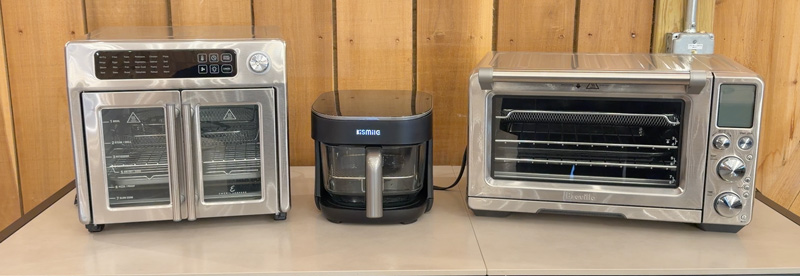
The most difficult to clean are the ones with metal baskets or plates, which includes the Kismile, Emeril Lagasse, and the Breville. The metal surfaces required being soaked in hot soapy water, scrubbing with a brush, sometimes pulling bristles out of the brush or leaving sponge particles behind, and they were just a pain.
Additionally, like I mentioned previously, the 2 cabinet style air fryers needed to be wiped down internally pretty much every time. Placing the broiling pan under the metal basket helps some, but every time you pull the metal basket out by itself, food drips through to the cabinet, door, and counter.
The Best
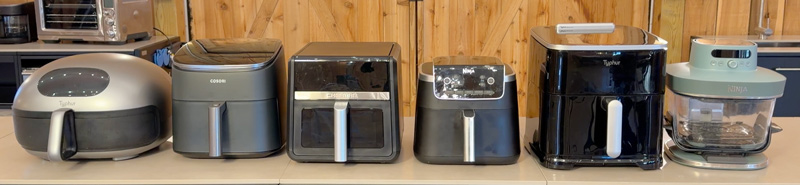
The next category includes all the rest. They all wash up easily with their nonstick coating. All of them have dishwasher safe baskets, but I’ve noticed that they actually get a better clean and the nonstick lasts longer when we handwash them.
Even Better
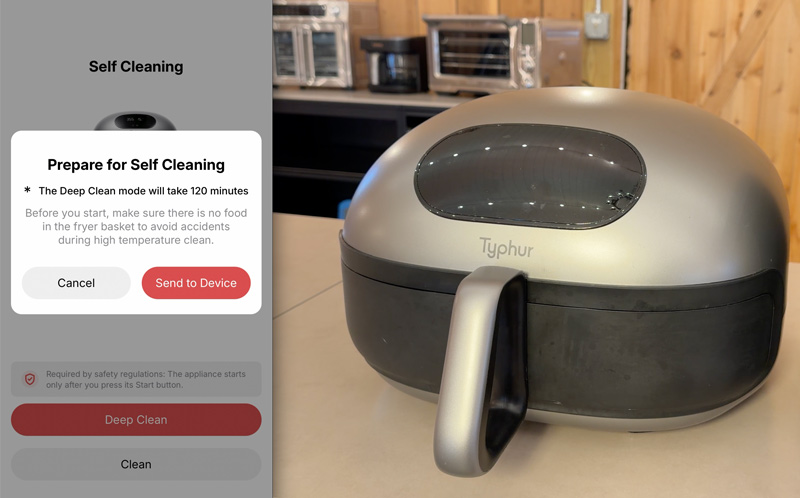
The third category only includes the Typhur Dome 2, because it has a self-cleaning mode for cleaning the top burner. It’s just like self-cleaning your standard convection oven. After washing the basket yourself, because you’ll still have to do that part, you can start self-clean mode from the app for either 1 or 2 hours, where it runs super hot, cooking off the greasy buildup on the burner. It really makes a big difference and I suspect it also extends the life of the appliance.
Our Picks for the Best Air Fryer in 2026
Throughout all of our testing, we awarded each air fryer a score between 1-3, with 1 being best and 3 being worst. After tabulating the scores, here are our results:
#9: In last place with an average score of 2.36, we have the Breville Smart Oven Air Fryer. Shocking, I know, that one of the most expensive options came in at the bottom. If this was a toaster oven roundup, I’m sure it would have been different, but we’re grading it as an air fryer, which is claims to be, and it came up short in that category.
#8: The Emeril Lagasse French Door air fryer had an average score of 2.29. Again, my previous notes apply here as well.
#7: The Ninja Crispi Pro had an average score of 2.07.
#6: The Kismile AeroLucen 5-quart Glass Air Fryer had an average score of 2.0.
#5: The Ninja Air Fryer Pro had an average score of 1.86.
#4: The 6-quart Cosori TurboBlaze had an average score of 1.71.
#3: The Typhur Dome 2 had an average score of 1.5.
#2: The Chefman 9-quart air fryer had an average score of 1.43.
#1: And the Typhur Sync air fryer comes in 1st place, with an average score of 1.36.
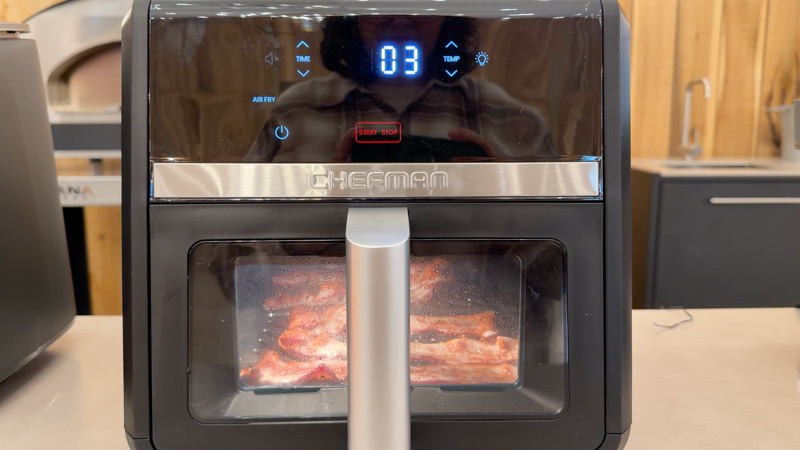
So here’s what I would say: The Chefman 9 quart is definitely my budget pick. It’s the least expensive of all of these AND it came in 2nd place, which is really saying something.
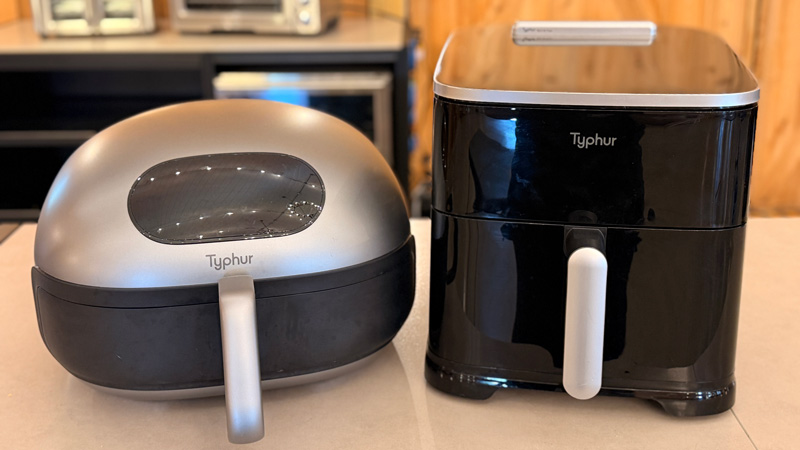
The 2 Typhur air fryers are BOTH great; deciding between the 2 really depends on how you use your air fryer.
For our family, the Typhur Dome 2 makes more sense. We don’t do a lot of cooking large raw proteins in our air fryer, which is where the Sync really shines. Our family prefers the shallow wide basket of the Dome, and I love the dual heating elements and self clean function, so this is the air fryer that will go home with us at the end of the day.
Quick Links to the products mentioned in this post:
- Breville Smart Oven Air Fryer or Amazon
- Chefman 9 Qt
- Cosori Turbo Blaze
- Emeril French Door or Amazon
- Kismile AeroLucen 5 QT or Amazon
- Ninja Air Fryer Pro or Amazon
- Ninja Crispi Pro or Amazon or SharkNinja
- Typhur Dome 2 (Use code THEBBQLAB to save 10%) or Amazon
- Typhur Sync air fryer (Use code THEBBQLAB to save 10%) or Amazon
- Feathered Formula Chicken Rub


Leave a Comment