
Looking for the best smash burger press to go with your outdoor griddle? We tested 11 burger presses ranging from just $9 all the way up to $99 to find out which ones actually make better smash burgers—and which designs just get in the way.
Quick Links to the products mentioned in this post:
- Breeo Burger Press (Use code BBQLAB5 to save 5%)
- Le Griddle Burger Press (Use code BBQLAB for VIP pricing)
- Wonderful Cuisine press
- Sasquash Burger Smasher
- Weber burger press
- Solo Stove Steelfire burger kit
- Pit Boss smash burger press
- Camp Chef Smashed Burger Kit
- Traeger Grills Flat Top Burger Kit
- Cuisinart Smash Burger Press
- Pisol smash burger press
- Essential Equation (Use code SMASH for 10% off for a limited time.)
- Solo Stove Steelfire griddle (Use code BBQ20LAB26 to save $20)
- Le Griddle Pro Series 75 (Use code BBQLAB for VIP pricing)
We compared weight, size, materials, ease of cleaning, and most importantly, how evenly each press actually smashed a burger. Along the way, we found some big differences in handle design, pressing surface, dishwasher safety, and overall versatility.
Whether you’re looking for a dedicated smash burger press, something that can double as a bacon or steak weight, or just the best option for your budget, we’ll help you figure out which style makes the most sense for your griddle.
Here at The Barbecue Lab, Melissa and I test gear and show you our favorite recipes to help you dominate your backyard. Some of these presses we purchased ourselves and some of them were gifted over the years by manufacturers, but we’re committed to fair and unbiased testing and our thoughts shared in this video are our own.
11 Smash Burger Presses tested:

I could go into all of the details, but that’s boring… and albeit necessary, so I’ll use charts to speed this up.
What is the weight of each press?
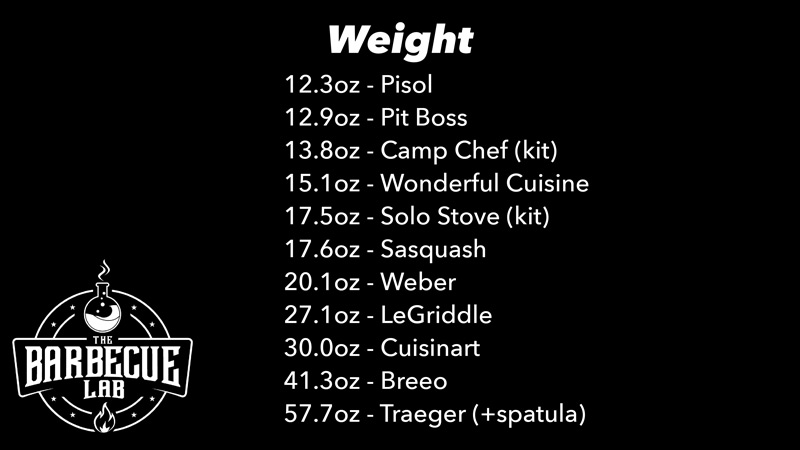
Turns out the Traeger is the heaviest and the Pisol is the lightest.
What is the width of each press?
How large of a burger would it smash? The Weber is the widest in the group at 7 inches across. The smallest is the Pisol at 5 and a half by 5 and a quarter inches.
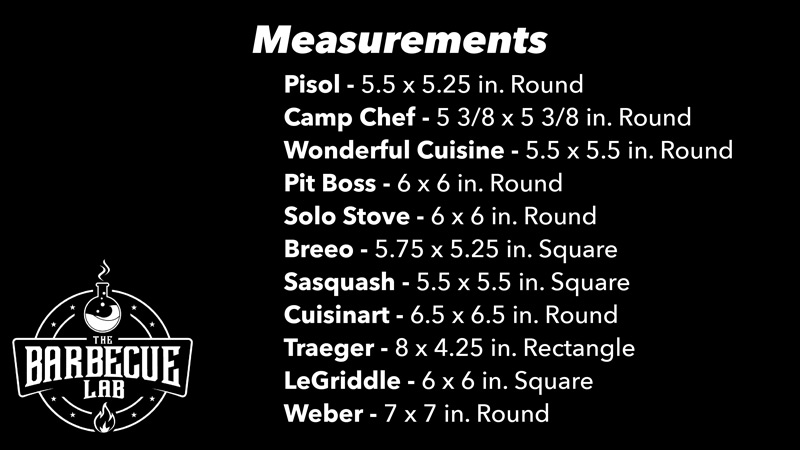
Width is a blessing and a curse. You can smash larger patties with larger presses, but if you’re doing a griddle full of burgers, too big is a problem.
What are the presses made out of?
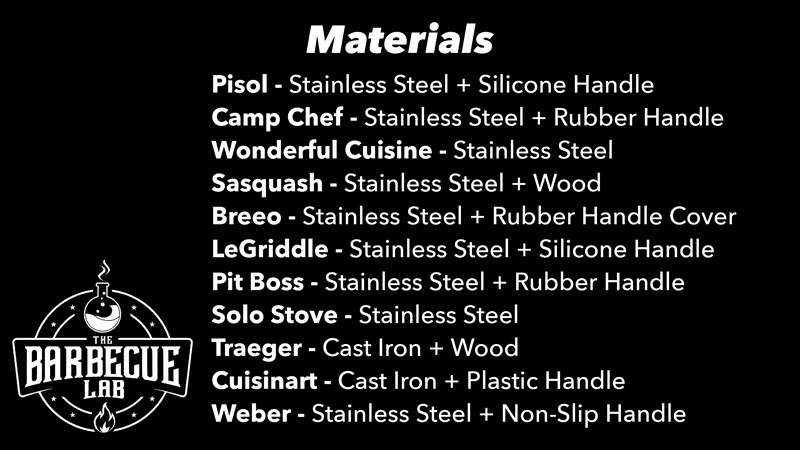
The materials each press is made of is important, and stainless steel is absolutely our favorite after all of our tests.
Are the smash burger presses dishwasher safe?
If you’re like me, you don’t want to add more “hand wash only” items to your kitchen whenever possible, and most of these presses can be thrown in the dishwasher after use. The Cuisinart will rust like crazy if you try that, and the wood handle will wear poorly over time. The same goes for the Sasquash. I like the wood handle, but the old version was just folded metal on the top, and I liked that one better for easy cleaning. Both Traeger tools with their wood handles are better hand washed, and all of the others should be good to go in the dishwasher.
But what we really want to know is how do these presses SMASH a burger… so let’s test them all, and find the best press for your backyard.
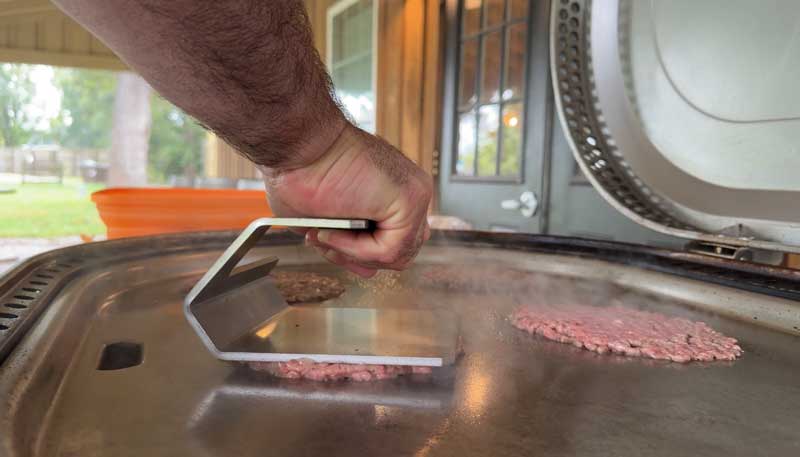
Smash Burger Testing
We’re using the Solo Stove Steelfire 30″, which is the griddle we keep ready to use at The Lab during the work day, and the Le Griddle Pro in our home outdoor kitchen.
For this test we cooked smashburgers a few days a week for lunch and put all of our burger presses to the test.
We got the griddle to 450 degrees, rolled the meat into 3 ounce balls and took them straight from the fridge to the griddle and pressed two burgers with each press.
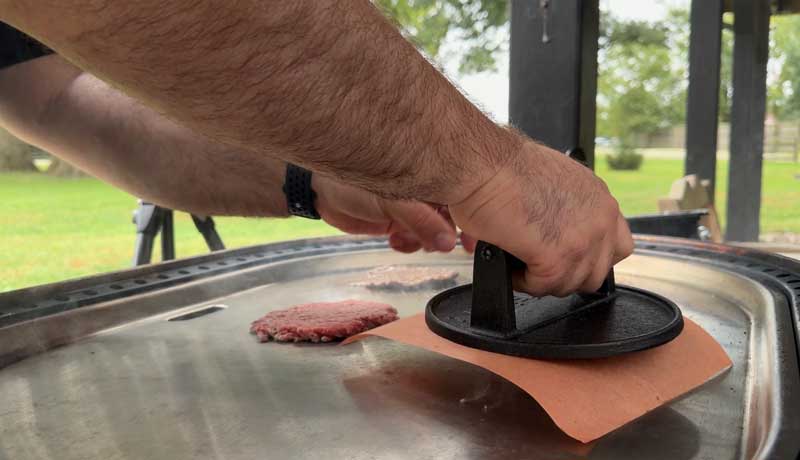
Should you use parchment paper?
I know there’s a lot of people out there who like to use parchment paper on their press to make sure you have a clean release from the burger, but the only press that really needed it was the Cuisinart, since it’s a cast iron press. Any press with stainless steel for the pressing surface was easy for us to smash and release, which I appreciate. When I’m cooking for a crowd. I don’t want to take the time to cut out perfectly sized squares of parchment when I can accomplish the task without it.
During our testing, all of the burger presses will smash a smashburger, but there are a few that are easier to use than others.
The Traeger press is a rectangular cast iron press, and it’s designed to be used with the spatula underneath… but it’s not wide enough for a 3 ounce burger, so you have to kind of 90 degree angle press, which is an annoying extra step. It’s my least favorite of the group, and yes I understand that they were going for a bacon weight/smashburger combo unit here, but I like it as a bacon weight, not necessarily as a smashburger press.
The Cuisinart press is cast iron with a wood handle, so while it’s heavy and smashes pretty evenly, it can’t be run through the dishwasher and really needs parchment paper between the burger and the press each time. Those are two down votes for me on that model.
The Pisol press is really light and I found that it smashed unevenly for me. One side of the patty was super thin and the other not so much. I don’t prefer this one.
The Camp Chef press feels like a slightly larger version of the Pisol press, but the handle is further from the pressing surface, leading to more uneven smashing in our tests.
The Pit Boss press has very little distance between the handle and the smashing surface, which makes even smashing simple, but it’s still a rather small pressing surface.
The Weber Press has a very large surface to smash with, and I found it rather easy to get an even press. It’s one of the largest surfaces of the entire group, so if you like your smashburgers in the 4-6 ounces per patty range, this press can accomplish that. The downside is that it takes up more real estate, so it limits how close patties can be to each other before they start smashing together.
The Solo Stove press is unique in that there appears to be a double layer of metal with an air gap for the pressing surface. There’s no way this is solid stainless steel or it would weigh much more. It’s a good press, but what I don’t love is that you can’t get this press without buying the whole Burger kit, which out-prices this against the other presses in this roundup. You do get a steam dome and a wire rack, but it’s $99 for the set.
For a change in design, the Wonderful Cuisine press (which if I’m honest sounds like a local Chinese restaurant instead of a burger press company) has a central knob style handle instead of the horizontal entire length handle we’ve seen so far. I didn’t know how I’d feel about this press, but I really like it overall. It gives you the opportunity to really smash the patty edge if you want the crispy edges you’ll find in diners.
The Sasquash has been our go to press for many years now, and I’ve used it for so long that it’s become one that I prefer. This exact press doesn’t exist anymore, since the new ones are circular instead of square, but the handle looks to be the same. I’ve really liked this design, but there’s a new design style that I like way more than I thought I would.
Both the Breeo and LeGriddle presses are designed in this new style. The Breeo weighs a whopping 41.3 ounces (2.58 pounds) and the surface is 3/16th’s of an inch thick. The Le Griddle weighs 1.7 pounds and is 2 millimeters thick (or about 1/16th of an inch.) Breeo is $49 while Le Griddle is $27, but I would use both of them given the opportunity.
Final Thoughts
At the end of the day, I don’t want to complicate which one is the best, because I think there are a couple of these that I really enjoy using for different reasons.
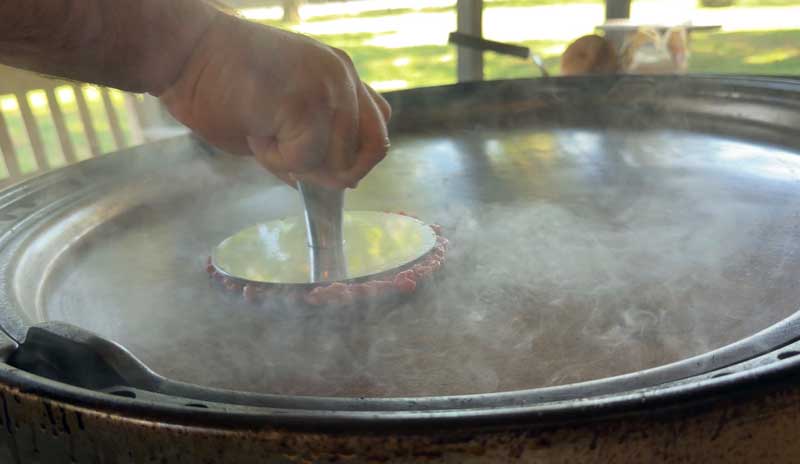
First, let’s talk about the Wonderful Cuisine press. I like this style of burger press, but let’s first admit that it’s really just a burger press and not an overall griddle press. Others like the Breeo and Traeger can easily function as bacon presses and steak weights, but this one really isn’t that multi-functional. I like being able to do a regular smash or flattening out the edges to get that crispy skirt on a patty if you want. That’s what sets this one apart, and I’m keeping it accessible in the outdoor kitchen once this testing is done.
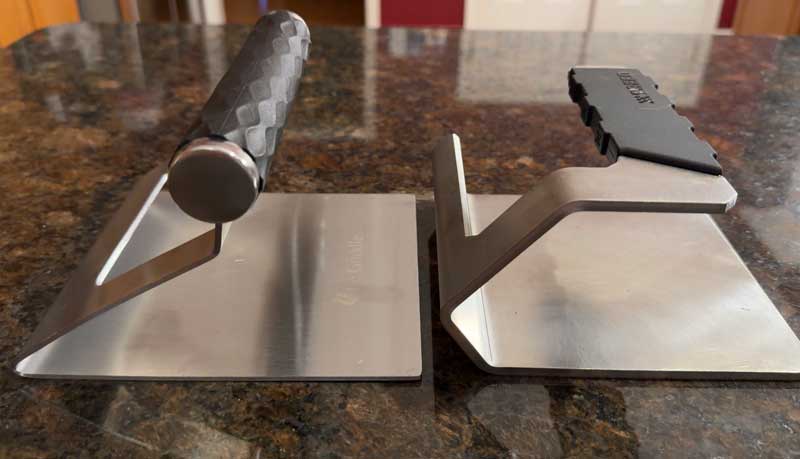
The Breeo and the LeGriddle models I also really enjoy, and they’re pretty equal in my opinion for the price. Breeo is not quite twice the price of the LeGriddle, but it’s heavier and is designed to be used as a griddle weight for their live fire griddles. The Breeo is easily the most robust of the group, and I have no doubt I’ll pass this on to my kids one day. LeGriddle is right there with the Breeo, not as heavy but there’s certainly value in the price point compared to the Breeo.
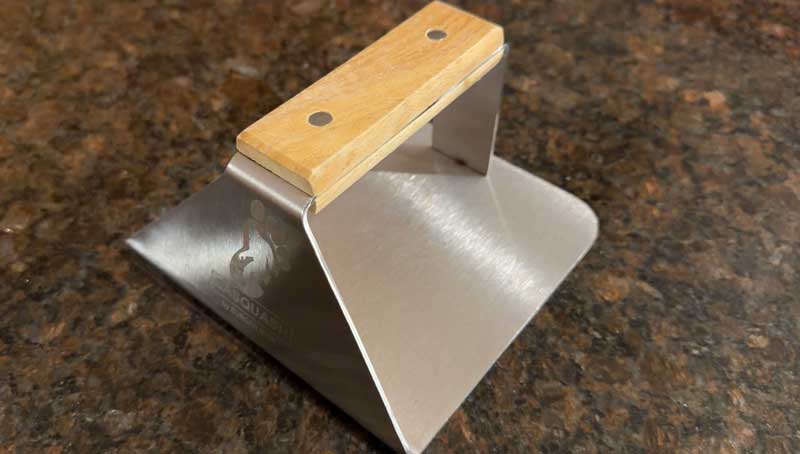
Sasquash has been my main press for at least 5 years now, and I do still really enjoy it, but it’s the round models available now which I haven’t tested. If they’re anything like the last version, i’ll probably love them, but i’ll have to get hands on first before I know.
If I had all 11 of these presses in a line and could choose any one of them for a Smashburger cook, I would choose the Breeo first. That would be my go to if I just wanted to do smashburgers for the family. If I wanted the crispy edges, I’d reach for the Wonderful Cuisine press and work on my technique. An initial press and then angled around for a crispy skirt.
If I was being really budget conscious, I’d pick the Pisol for under $10. It is what it is, and I’d buy it for $10 with expectations that it’s a $10 burger press and just 20% of the Breeo press price.
What’s the best seasoning for smash burgers?
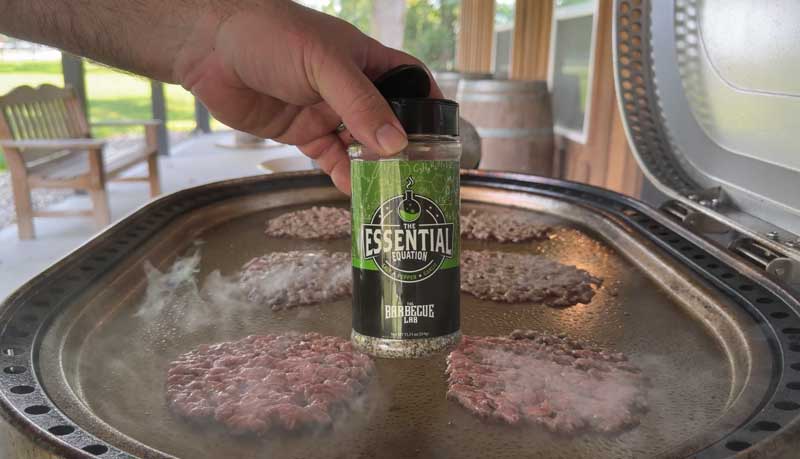
If you enjoy smash burgers, you’ve got to try a bottle of our Essential Equation for your next burger night. We literally created this salt, pepper, garlic blend with burgers in mind, and I haven’t found anything better! So for a limited time, use the code SMASH to save 10% on your purchase and try it for yourself.
Quick Links to the products mentioned in this post:
- Breeo Burger Press (Use code BBQLAB5 to save 5%)
- Le Griddle Burger Press (Use code BBQLAB for VIP pricing)
- Wonderful Cuisine press
- Sasquash Burger Smasher
- Weber burger press
- Solo Stove Steelfire burger kit
- Pit Boss smash burger press
- Camp Chef Smashed Burger Kit
- Traeger Grills Flat Top Burger Kit
- Cuisinart Smash Burger Press
- Pisol smash burger press
- Essential Equation (Use code SMASH for 10% off for a limited time.)
- Solo Stove Steelfire griddle (Use code BBQ20LAB26 to save $20)
- Le Griddle Pro Series 75 (Use code BBQLAB for VIP pricing)

Leave a Comment