
If you’re on the hunt for the best sous vide cooker, we’ve done all the research for you so you can use our evidence to make an educated decision on which immersion circulator is best for you.
Quick Links to the products mentioned in this post:
- Anova Nano 2.0
- Anova Precision Cooker 3.0
- Anova Precision Cooker Pro
- Breville Joule Turbo or here
- Greater Goods Precision Cooker
- InkBird ISV-200W
- MEAT! Sous Vide 4 (SAVE 20% with code: BBQLAB)
- MEAT! Sous Vide 10 (SAVE 20% with code: BBQLAB)
- MEAT! SV10 container (SAVE 20% with code: BBQLAB)
- Wancle Sous Vide
- Homenote sous vide container
- Thermoworks Signals
- Thermoworks Timestack
- Thermoworks Reference Thermapen
- Thermoworks pot clips
- GrillBlazer Su-VGun (SAVE 20% with code: OOFQYGCS)
- Decibel meter
- Barbecue Lab Seasonings

You may not see it, but there’s a dirty little secret hiding in the kitchen of your favorite restaurants. Cooking in immersion circulators or “Sous vide” cooking is standard operating procedure for everything from steaks, bbq meats, sides and more than you can imagine, and people at home are getting on the sous vide bandwagon to save time and get more predictable results for restaurant quality meals at home. In this article, we’re putting 9 sous vide machines to the test to see which one deserves a place on your countertop.
We’re testing the strength of the heating elements, the circulation of the bath, how accurate they are on the temperature front, how loud they are while they’re running and a whole lot more. Their prices range from $40 to almost $300, so let’s start off by meeting the contenders.
Sous Vide Immersion Circulators
We purchased these sous vide machines, so this isn’t sponsored content and our opinions are our own.
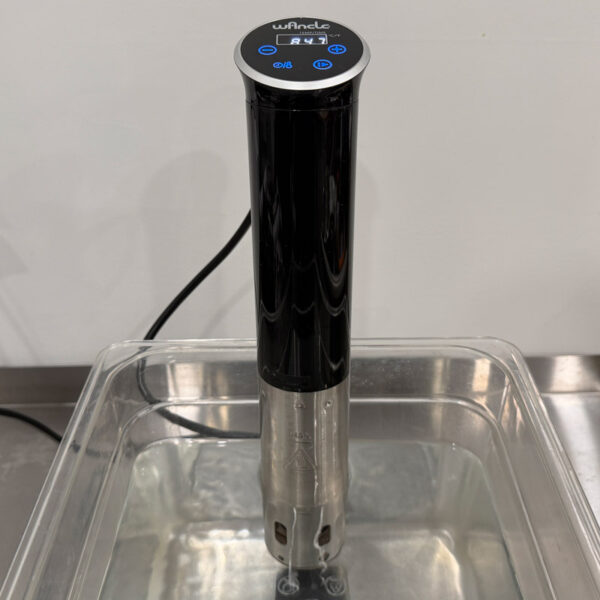
Wancle Sous Vide Machine
- 1100 Watts
- 77-194° F
- $41.99
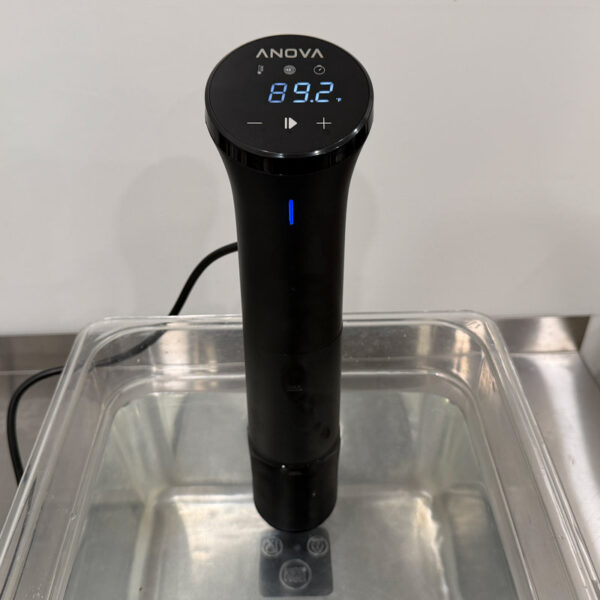
Anova Nano 2.0
- 800 Watts
- 32-197° F
- $63.99
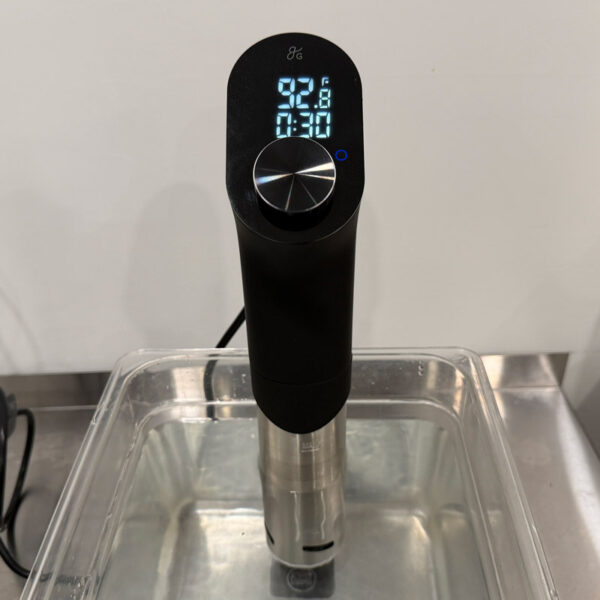
Greater Goods sous vide machine
- 1100 Watts
- 68-203° F
- $89.99
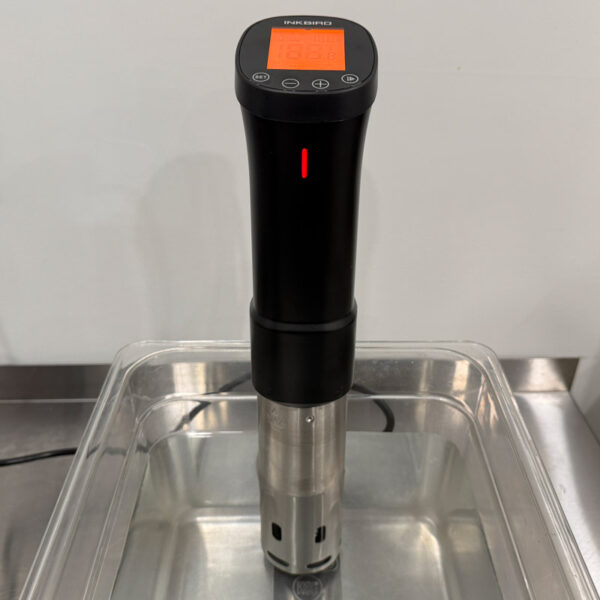
Inkbird Sous Vide Machine
- 1000 Watts
- 32-194° F
- $95.99
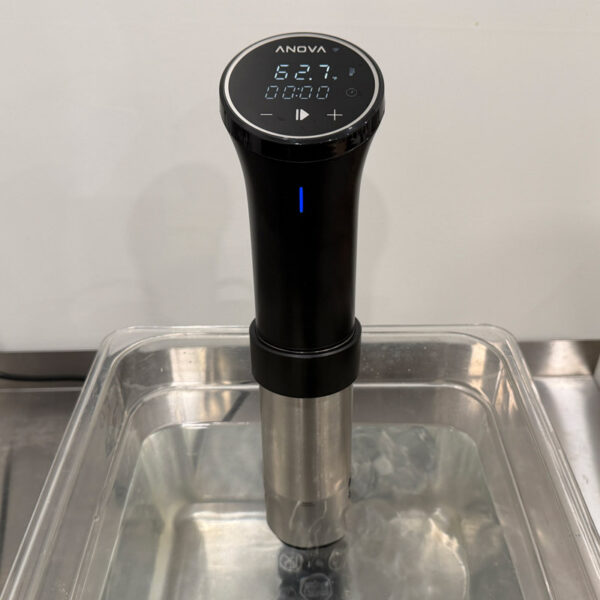
Anova Precision Cooker 3.0
- 1100 Watts
- 32-197° F
- $169
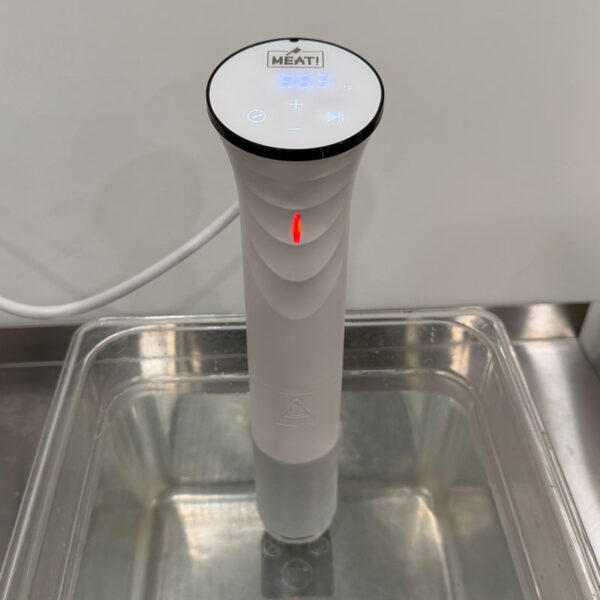
MEAT! Your Maker Sous vide 4
- 900 Watts
- 41-194° F
- $169
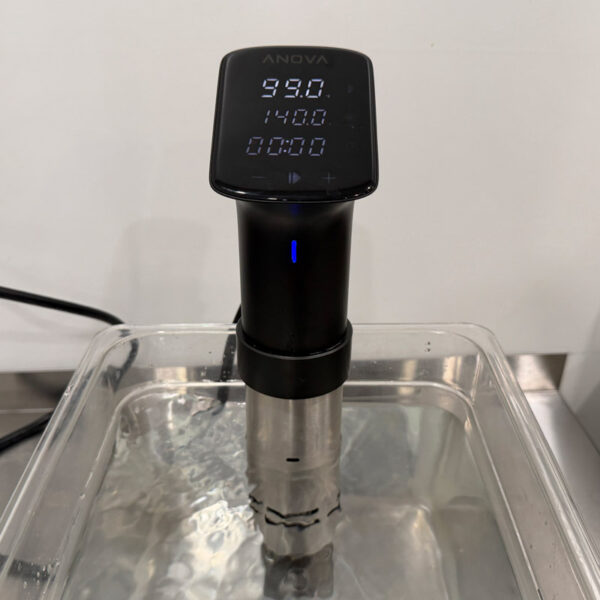
Anova Precision Cooker Pro
- 1200 watts
- 32-197° F
- $199.99
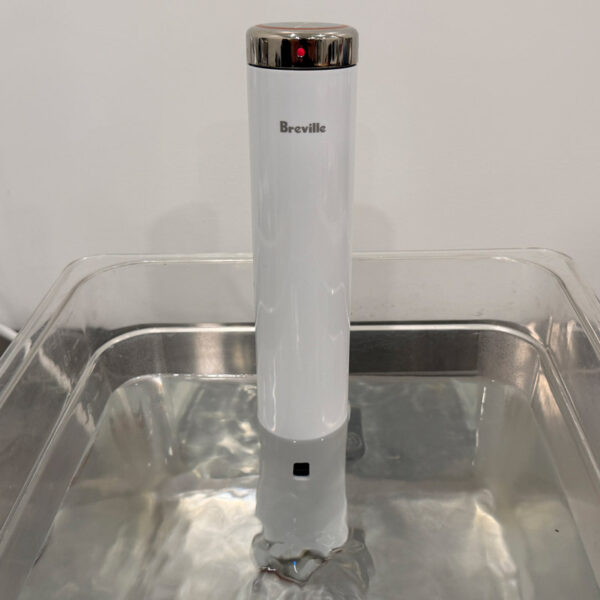
Breville Joule Turbo Sous Vide
- 1100 Watts
- 68-197° F
- $238
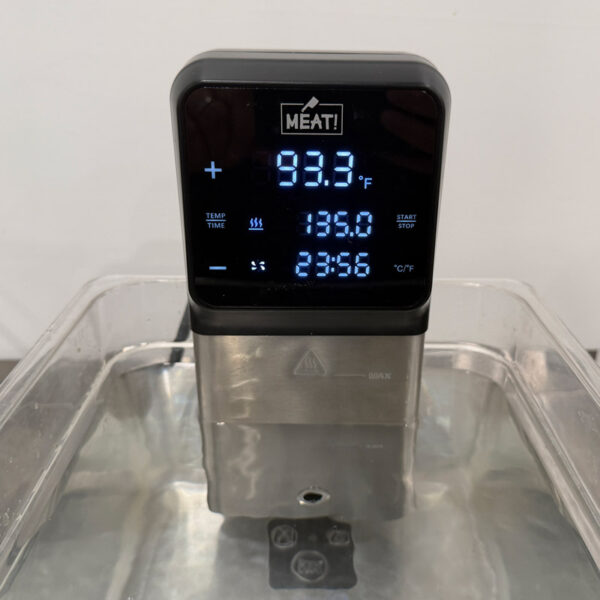
MEAT! Your Maker Sous Vide 10
- 1200 Watts
- 41-203° F
- $279.99
Testing Sous Vide Machines: Heat Up Time
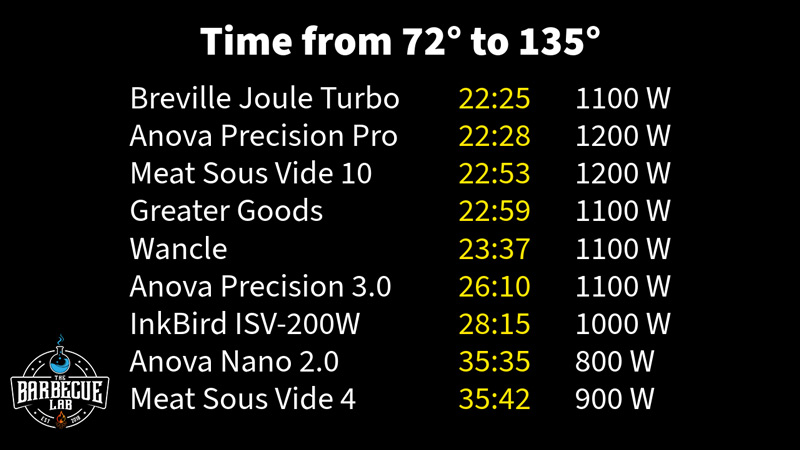
To test any sous vide, I want to know the strength of the heater. We filled the plastic tub with 10 liters of cold tap water and set each sous vide machine to 135° Fahrenheit. We set a stopwatch on the Thermoworks TimeStack and timed how long it took for the sous vide to indicate that the desired temperature had been reached.
Here’s a chart of the results, with the Breville Joule Turbo sous vide being the fastest, hitting 135 degrees in 22 minutes and 25 seconds. The Anova Precision Cooker Pro was just 3 seconds slower and the MEAT! 10 sous vide came in third just 28 seconds behind our first place sous vide machine.
As you would expect, there’s a fairly direct correlation between the wattage and how quickly each sous vide cooker was able to reach temperature.
Testing Sous Vide Machines: Temperature Accuracy
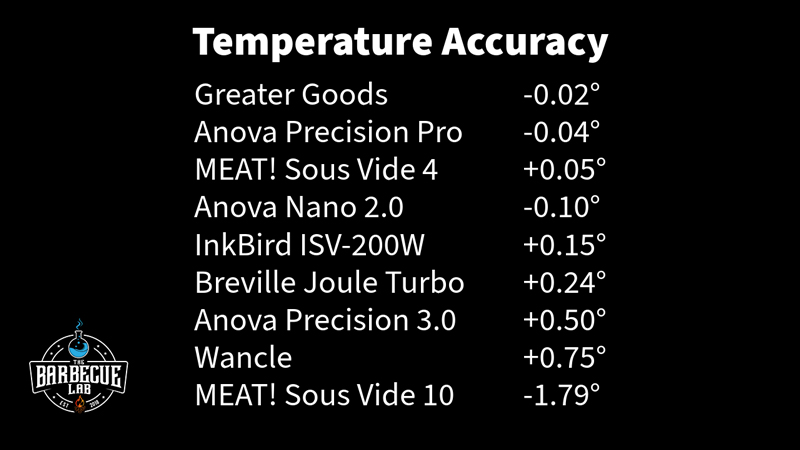
During the heat up test, each sous vide cooker told us that the hot water bath had reached the target temperature, but we want to verify that as well. We inserted the Reference Thermapen into the water bath for 1 minute to make sure we’re getting a fair reading, and here are the results.
The Greater Goods model showed it was only .02 degree under temperature with the Anova Precision Pro and the MEAT! 4 at .04 and .05 respectively. The MEAT! 10 had the largest difference with 1.79 degrees under the set temperature.
Testing Sous Vide Machines: Circulation Pump
One of the hallmarks of sous vide cooking is how evenly it cooks, but we wanted to test how well each of these circulated the water to keep the heat even throughout the bath.
During the heat up test, we attached 2 food probes to a Thermoworks Signals 4 channel thermometer using 2 standard meat probes. The first probe we have on the front right side only about an inch deep, and the second probe is on the back left, at full depth, closest to the circulator.
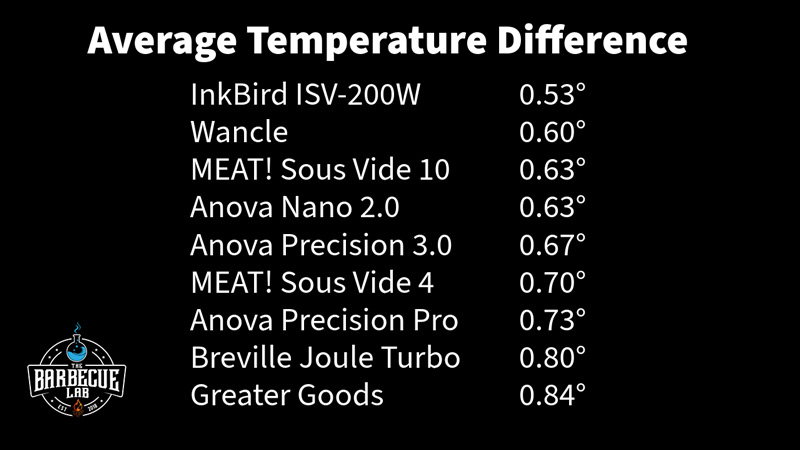
We were curious how much of a temperature difference would be measured at these two different points in the water bath. The Thermoworks Cloud recorded temperature readings every minute for each thermometer. We took the difference between the two and averaged the results, and here’s how things looked.
The InkBird showed a .53 degree difference throughout the bath for the most stable bath temperature, but all of the models really excelled in this test. With a range of .53 as the best and .84 as the worst, they were all more than capable in this test.
Testing Sous Vide Machines: How loud are they?
Since we’re talking about a cooking device that’s probably going to operate in the kitchen, it’s important to know how much background or foreground noise they’re going to add to your home.
We took readings from a decibel meter 2 inches from the unit while operating, and here were the max decibels for each model.
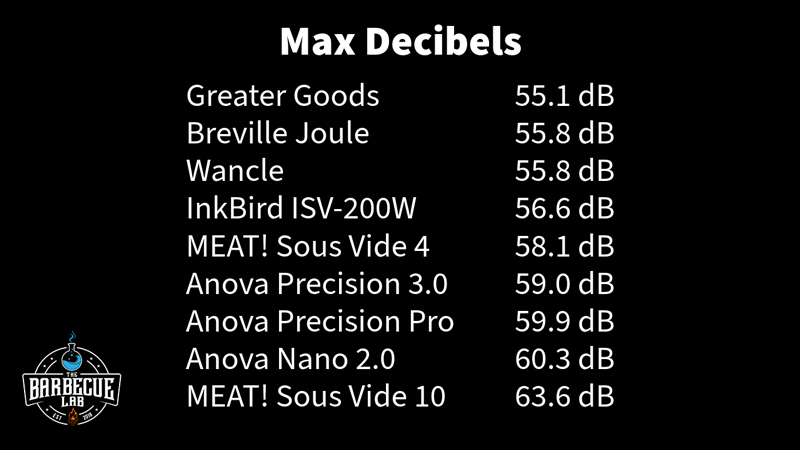
While I wouldn’t consider any of them to be “loud”, the Greater Goods, Wancle, and Breville Joule Turbo sous vide machines were so quiet, we could barely even tell they were on.
Testing Sous Vide Machines: User Experience
We’ve covered a lot of ground so far, but let’s talk about what it’s like to use these firsthand.
Can you operate the controls with wet fingers?
We’re working with water here, so I wanted to know if you could use the onboard controls with damp fingers, and there weren’t any problems with any of them, even when you’re pressing on a digital display, which I thought might have issues.
How do they attach to the cooking vessel?
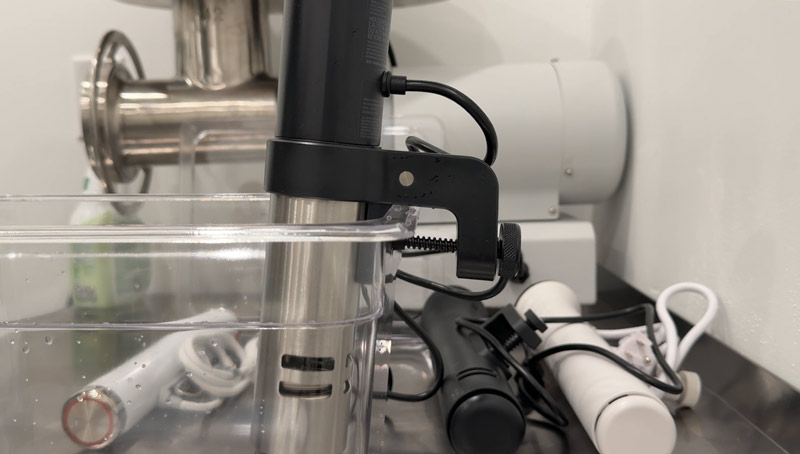
Whether your sous vide setup is utilizing a stock pot, Dutch oven, or a dedicated plastic tub, you still need to attach the unit to the side of the container, and they’re quite different in how they approach that. Most of these have an adjustable clamp, while a few have a one-handed pinch clip. All of these will work with both a sous vide tub and a stock pot.
The Breville Joule Turbo sous vide machine has a unique magnetic base for metal pots, eliminating the need to clamp to the side. It can literally stand up independently in the middle of the pot.
For using them with a plastic tub, they’ll all clamp easily, but it’s the lid for that particular tub you need to check before you buy. Most of these machines are circular in nature, and most plastic tubs have a circular cutout in the lid.
The MEAT! Sous Vide 10 model is rectangular, and isn’t compatible with standard tub lids. MEAT! sells a tub with the right cutout, so it’s worth noting that covering a long running hot water bath stops evaporation and holds the heat in. Working with a pot, you might have to resort to plastic wrap, which does work fine in our experience.
How deep of a water bath is needed?
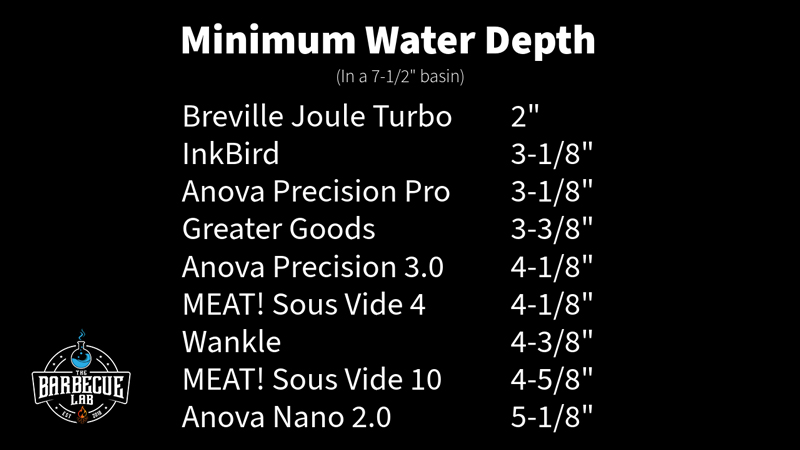
All of these sous vide machines have minimum and maximum water level markings on the shaft. Some of these units require a higher water level than others, so we measured the height of the minimum required depth for each using a 7 and a half inch tall plastic sous vide container. The Breville Joule Turbo sous vide cooker only needed 2 inches of water while the Anova Nano 2.0 needed 5 and 1/8th inches of water, so a massive difference in how these models are designed and how much water you’ll need to operate them.
How easy are they to clean?
Anytime water is involved in cooking, there’s the question of cleaning, and I wanted to know how easy each of these are to clean. How easy are they to take apart to get between the clamps and the circulator? The only model that doesn’t disassemble for cleaning is the Anova Nano 2.0, and that gives me some pause on that model. The Breville Joule Turbo sous vide cooker only allows for disassembly of the magnetic portion on the bottom, while all the others allow the sleeve to come off to clean the internal elements, though a couple of them will require a screwdriver to do so.
Temperature range comparison
While none of these sous vide immersion circulators have the ability to cool water on their own, some of them are at least able to circulate an ice water bath without heating the water. We frequently use ice water baths for thawing frozen meats or rapidly chilling cooked food.
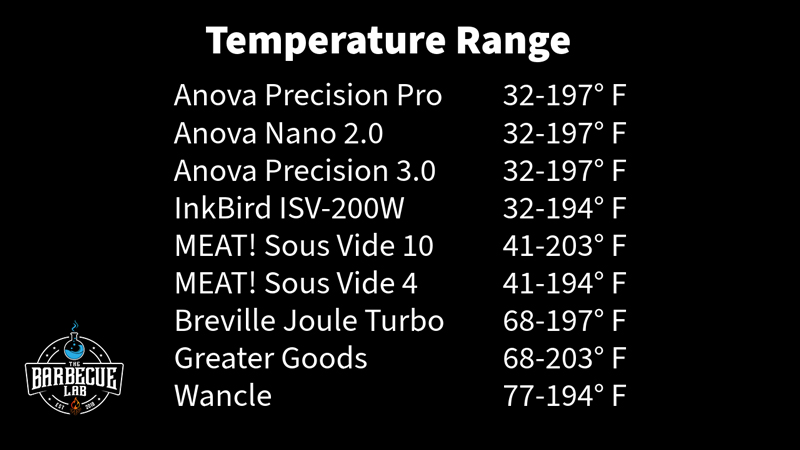
Some of these have much higher low temperatures than 32 degrees Fahrenheit, which is where we run our ice baths, so that’s important. The Wancle has a low temperature limit of 77°, and the Greater Goods and Breville Joule Turbo sous vide machines have 68° for a low, followed by both of the MEAT! Your Maker models have a low of 41°. You certainly can thaw meat at these higher temperatures, but we really prefer using a sous vide session where the water bath won’t automatically heat when we’re trying to keep things as cold as possible.
The immersion circulators that can be set as low as 32° F include all 3 of the Anova Precision Cookers as well as the Inkbird sous vide machine.
On the flip side, there’s only an 11 degree difference in the high cooking temperature settings, with the Greater Goods and MEAT! sous vide 10 reaching the highest temperature of 203° F.
App Connectivity
Some of these sous vide immersion circulators have WiFi, Bluetooth, and app connectivity, and the question is, is that important?
We use sous vides both at the office and at home, and I admit that I often forget that I have food in them, so notifications and connectivity would be incredibly helpful.
The Breville Joule Turbo sous vide is easily the most connected in that it doesn’t even have a display or touchscreen other than what you see on the app. The free app is a requirement for using it at all.
The Anova Precision Cooker Pro and the Anova Precision Cooker 3.0 both use the Anova app, and you can control the units without the upgraded monthly subscription you’ll see offered. Inkbird rounds out the group with app functionality as well, but we found the Breville app to be the most robust of the group.
What’s the Best Sous Vide Machine For Me?
Here’s how my brain sees the results after all of our testing. We’ve already spent our money on these, so what’s done is done. But what would I buy if I had the knowledge of these tests and hadn’t already purchased them all?
Best Budget Sous Vide Machine
The least expensive was the Wankle, and it punches above it’s weight class for sure. It’s 5-7x less than some of the others, but it did the job and I think it’s a great entry into sous vide for those who want to try it out. It’s absolutely my budget pick, and at around $40, I wouldn’t hesitate to use it as my daily driver at home. My only question or hesitation is regarding its longevity. I’ve never heard the brand name, so I don’t know how confident I am in it working for more than a year or two, but still a steal to get started if you’re new to this.
Melissa’s Pick
Melissa and I have different opinions on what we would choose if we could only pick one. She really likes the app functionality of the Breville Joule Turbo sous vide and the fact that she can audibly tell Alexa to set up a cook session. She also loves how slim and quiet it is and how quickly it heats up. We didn’t go into any detail about the Turbo mode that it has, which cuts time needed in the bath by half, so that’s another plus.
But let’s be honest, Melissa’s bougie. She’s seen all the bells and whistles, and given the choice, she wants the convenience.
David’s Pick
I don’t disagree with the things that Melissa loves about the Breville Joule Turbo sous vide. I’m right there with her. However, the Breville falls short in one category for me, and that’s the low-temperature ability.
I prefer a sous vide that will allow me to circulate an ice bath, and with the Breville insisting on heating water to at least 68 degrees, that just doesn’t work for me. I thaw a LOT of meat for things we cook on the channel in a sous vide, so I want controls under 40 degrees to keep meats out of the 40-140 time-temperature danger zone. That eliminates both MEAT! units, the Breville, Wankle, and Greater Goods.
Anova and Inkbird can both go down to 32 degrees, so that’s where my decision lies.
- Anova gives a 2-year warranty to InkBird’s 1-year.
- It can also reach a few degrees higher.
- The InkBird is a little quieter, but that’s not as important to me here at the Lab since the sous vide will be in the kitchen separate from where I’ll be working most of the time.
- Both brands have apps with similar features, so no decision help there.
- Two of the Anova’s heated up faster than the Inkbird, so I’ll kick the Nano out of the running there.
- I think it really comes down to the Anova Precision Cooker 3.0 and the Anova Precision Cooker Pro.
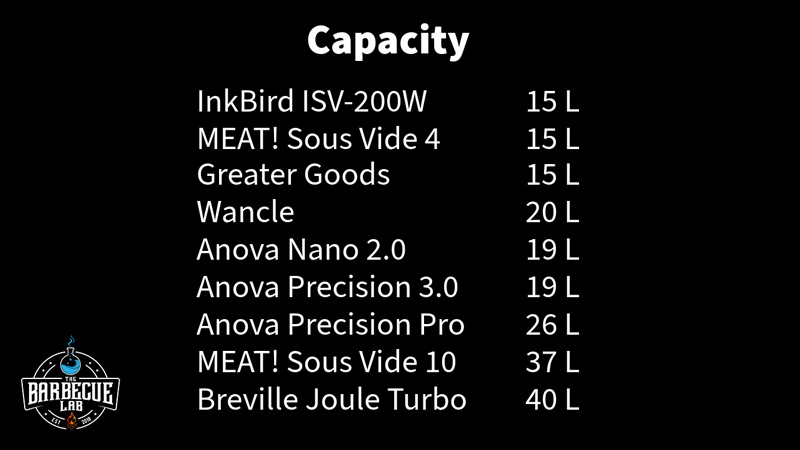
Probably, for me here at the Lab, I’ll use the Anova Precision Cooker Pro because of its greater capacity of 26L over the 19 L capacity of the 3.0, but if I didn’t already own it and was buying it for home, I would likely get the Anova Precision Cooker 3.0 as long as I’m not sous vide cooking for large crowds.
So, there you have it. That’s my thought process for what would work best for me and why. How about you? Even if you’re not currently in the market for a sous vide, what factors would be driving your decision here? Sound off in the comments down below.
Read Next:
- If you’re shopping around for sous vides and also need a vacuum sealer, we’ve already done the research for you there too. BEST VACUUM SEALER
- Since sous vide meats are uglier than sin coming out of the hot water bath, check out our roundup of propane torches for some suggestions on what to use to get that final sear on your sous vide proteins. BEST PROPANE TORCH
Quick Links to the products mentioned in this post:
- Anova Nano 2.0
- Anova Precision Cooker 3.0
- Anova Precision Cooker Pro
- Breville Joule Turbo or here
- Greater Goods Precision Cooker
- InkBird ISV-200W
- MEAT! Sous Vide 4 (SAVE 20% with code: BBQLAB)
- MEAT! Sous Vide 10 (SAVE 20% with code: BBQLAB)
- MEAT! SV10 container (SAVE 20% with code: BBQLAB)
- Wancle Sous Vide
- Homenote sous vide container
- Thermoworks Signals
- Thermoworks Timestack
- Thermoworks Reference Thermapen
- Thermoworks pot clips
- GrillBlazer Su-VGun (SAVE 20% with code: OOFQYGCS)
- Decibel meter
- Barbecue Lab Seasonings

Leave a Comment