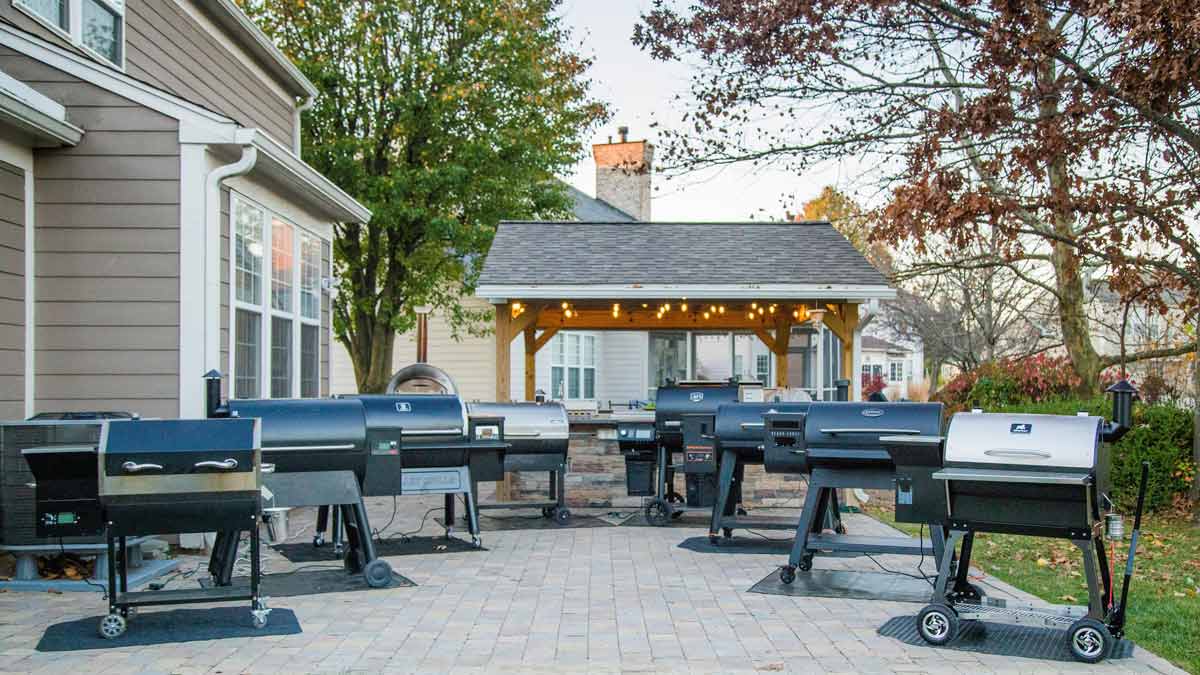
If you're new to the world of pellet grills, you're in the right spot. In this pellet-grills-for-beginners article, I'm going to break down the basics of pellet grills: how they work, how to keep them working, and how to be successful using them.

Quick Links to the products mentioned in this post:
- Grilla Chimp (Save 15% on select products: BBQLAB)
- Weber Searwood
- Camp Chef Woodwind Pro
- Traeger Woodridge
- Lonestar Cabinet Pellet Smoker
- Smokin Pecan pellets (First Time Customers save 10%: BARBECUELAB)
- Scrubit grill cleaning brush
- Competition blend pellets
- Royal Oak Charcoal pellets
- Shop Vac
- Scraper tool
- Smoking tube
- wood chip box
- pellet storage bin
- grease bucket liners
- drip tray liner
We've met a lot of people over the last few years that have been using a gas grill for as long as they can remember, but would like to start learning how to smoke meats on a pellet grill. Some even have one already, fully assembled in their garage, but they haven't worked up the courage to use it yet because they don't know how it works.
I'm not going to call this "Pellet Grills for Dummies" because I think that's a little offensive, but rather "Pellet Grills for Newbies." We're all newbies at some point; you've got to start somewhere.
Pellet Grill 101
To begin with, I'm going to introduce you to some new vocabulary that you may see throughout the remainder of this article.
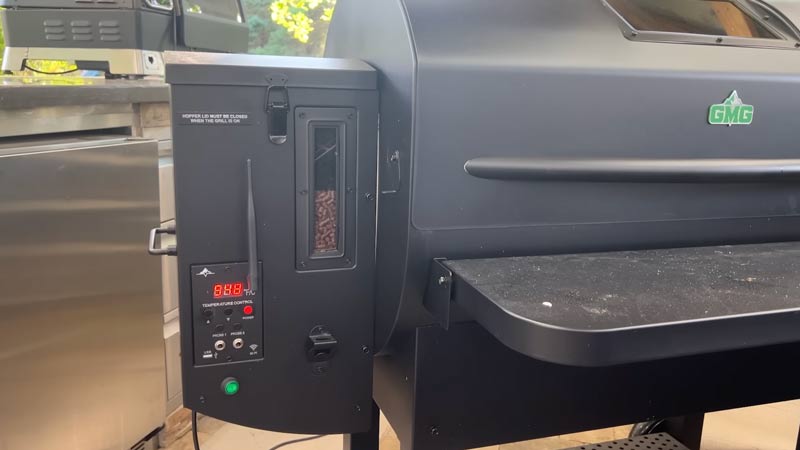
Pellet Hopper
This is the part of your pellet smoker that holds the wood pellets, or fuel for your pellet smoker. It's a vertical chamber, usually located on the left or right side of the cooking chamber. Pellet hoppers come in all sizes, some holding less than 10 pounds and others holding 20 or more pounds of pellets. Some, like this Green Mountain Grills Peak Prime 2.0, have a window so you can monitor your pellet level without having to open the hopper.
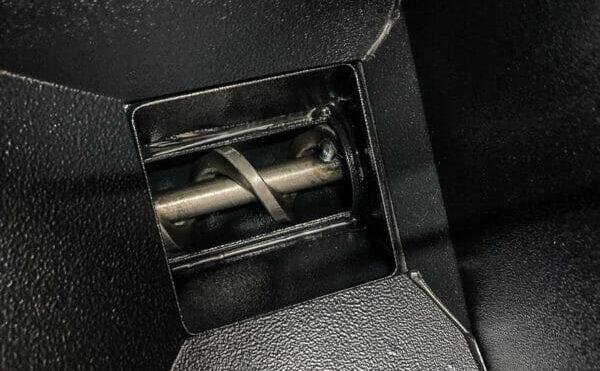
Auger
At the bottom of the pellet hopper, you'll find an auger. This is how pellets travel from the hopper into the fire pot.
Fire pot
Also known as the burn cup, the fire pot is located in the bottom of the cooking chamber. After pellets have completed their journey down the auger, they drop into the burn cup where they will ignite.
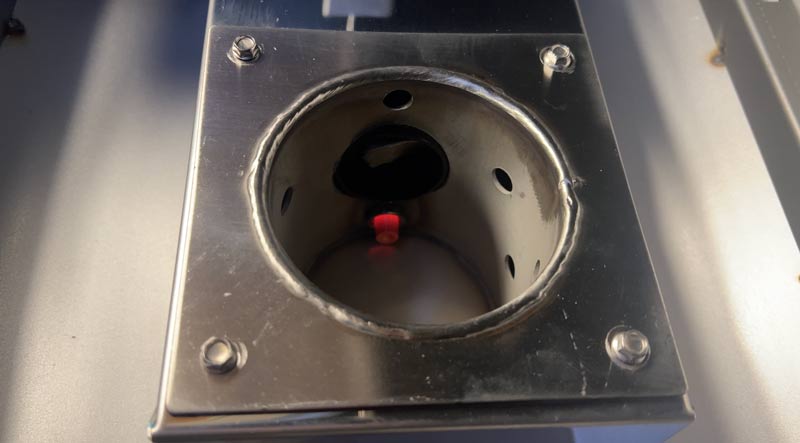
Hot rod
The hot rod is a (typically) metal rod that pokes out just below the auger in the burn cup. During startup, it glows red hot and when pellets make contact with its surface, they will ignite.
Controller
The controller is the brain of your pellet grill. Some are nicer than others, with digital controls and more capabilities, and others are more basic and analog. Regardless of where your controller sits on that spectrum, the controller is connected to an air temperature probe mounted inside the cooking chamber. When you set your desired temperature on the controller, it will tell the auger to feed enough pellets into the burn cup to reach that temp. It will continually monitor the air temperature and make tiny adjustments with the fan and auger to maintain your desired temperature.

Deflector
The deflector is a heavy metal piece that covers the burn cup, protecting the entire cooking surface from any direct heat. It deflects the heat to the front and back where it can then circle up and over the food on the grill grates. The deflector is also designed to direct grease to the proper collection point.
Pellet Grill bells & whistles
Some pellet grills include extra bells & whistles if the price is right. Obviously the more extra features, the higher the price. So in this section, I'll explain what some of those items might be and why one would consider paying more to have it.
Sear zone
Since pellet grills cook with indirect heat, some models include a sear zone to allow for direct heat grilling. Typically this means there is some kind of sliding baffle over the burn cup that opens a vent. Pit Boss pellet grills often include this option. In our experience this rarely adds much functionality. The burn cup is so small that you can really only sear 1 burger at a time over the area, so while I love the idea, the end result leaves me wanting.
Bluetooth & Wifi capabilities
Many grills have Bluetooth and Wifi capability where you can control the grill via an app on your mobile device. Not all pellet grill apps are made the same, but you can typically set the temperature, check the probe temperature and see how your meat is doing, and a whole lot more. This is a feature that can make a huge difference and I personally think it's worth the added expense, as long as the app function is smooth.
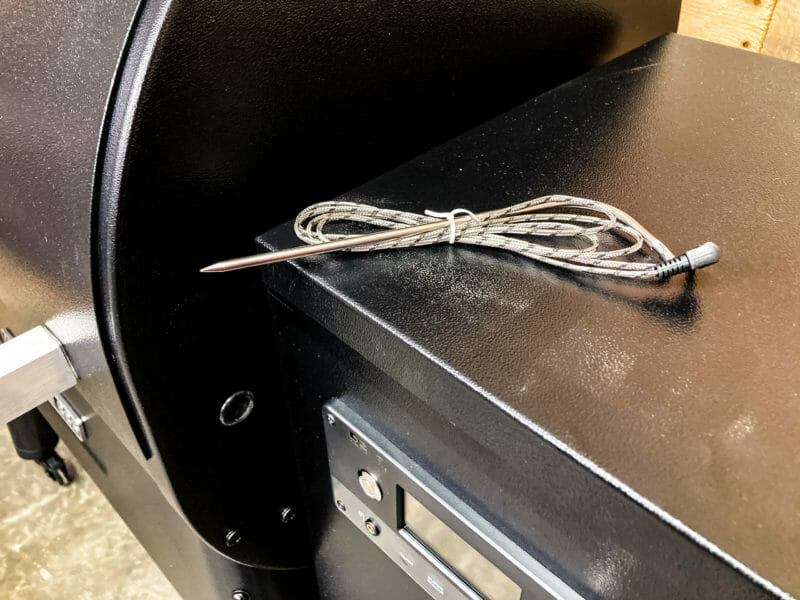
Integrated food probes
Most pellet grills these days include at least 1 food probe for monitoring the internal temperature of your cook. And if your pellet grill connects to an app, like mentioned above, you can set notifications to alert you when your food has reached the proper doneness.
Smoke boost
While pellet grills are a type of smoker, they do get some hate for adding less smoke flavor than an offset. Some pellet grill models offer a smoke boost option that's really just a way to tell the controller that you value smoke output more than you value steady temperatures. In some cases it's just a button that you hit, in others it's selecting a smoke level from 1-10, but in any case, it's telling the controller to let the pellets smoke longer instead of ignite immediately when added to the burn cup.
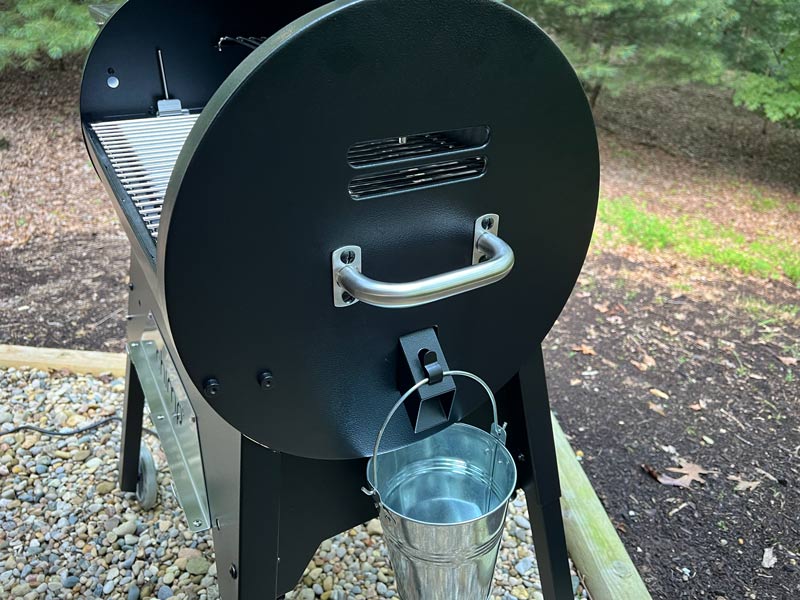
Ash/grease management
Some pellet smokers have more robust systems for ash and grease management. Typically this comes down to the size and location of collection. Smaller grease buckets need emptied more often and are more subject to accidental overflow. Buckets that are stowed away and hiding are less likely to be filled with rainwater or raided by hungry critters. We really like Traeger's EZ-Clean Grease & Ash Keg for this very reason.
Pause feature
Occasionally you'll find a pellet grill model that has the ability to pause the auger for 5 minutes. This is really helpful if you're needing to lift the lid and have it open for a few minutes. Hitting the pause keeps the controller from feeding too many pellets into the grill to try to keep a steady temperature. In other grills without it, you can get temperature spikes of +100 degrees easily, so we love a good pause feature.
PID Controller
You might have come across pellet grill models advertising a PID controller. This stands for Proportional-Integral-Derivative. A standard controller is programmed to give a specific amount of rotations to the auger to deliver enough pellets to achieve consistent heat at your desired temperature. A PID controller is much more sophisticated varying the speed of the fan and auger while interpreting past data and future predictions to get your temperature.
I know that's complicated, but I like to think of it like this. A standard controller is going to see more temperature swings, but it's also going to smoke more. A PID controller is going to have consistent temperature, but it won't smoke as much. I know we'd all love a pellet grill that holds temperature Rock Steady while smoking like an offset, but that's not how they work. If the wood is being used for fuel and not just smoke flavor, it's a dance of consistency vs. potency and you can have one or the other, but not really both.
How to Use a Pellet Grill
What do I need to do before starting my pellet grill for the first time?
There are a few things that you need to make sure you do before you use your pellet grill for the first time.
- 1First, make sure you've gotten all of the styrofoam and packing materials out of the grill. Styrofoam likes to hide, and you don't want to light it up with that in there.
- 2Next, fill the pellet hopper with wood pellets. Go ahead and fill it up to the brim.
- 3In order to light the grill, you need to get pellets to the burn cup. Some pellet grills will have a FEED button (or it might be called PRIME), that turns the auger to push pellets to the grill for the first ignition (and any time you run out of pellets on accident). If your grill doesn't have a FEED button (and most don't for some reason) you need to fill the hopper with pellets and turn the grill to ignite. Once the ignition process has started, the auger will spin and start taking pellets down to the burn cup, but this can take a LONG time. Like more than 20 minutes long in some cases. Many instruction books will tell you to start up the grill and take out the deflector and grates so you can see the burn cup and know when the first pellets have arrived on their journey. Once that first pellet hits the cup, most manufacturers will tell you to unplug the grill and tell it to run the startup process again, and that's how we suggest as well.
- 4You may hear from some people that you should spray down the inside of your pellet grill with canola oil before the first cook, and while that may be the case for offset smokers and larger grills, I suggest that you don't worry about it for your pellet smoker.
- 5Before cooking food in your new pellet grill, it is recommended to conduct an initial burn-in to burn off any manufacturing oils or chemicals. Check your manual for instructions specific to your model.
Every-time maintenance
There are a few simple tasks that would be good to develop a habit of doing every time you want to use your pellet grill.
- 1As with any grill, you'll want to clean your grill grates before cooking. Bring them inside, run them through the dishwasher, or we like to keep a Scrubit grill cleaning brush handy for a quick wipe down on cool grates.
- 2Secondly, you have to check the pellet supply before you light it up again. I can't tell you how many grills I've assumed I had enough pellets in the hopper and ran out mid cook. Just top it off and you should have at least 10 hours of cook time depending on your temperature.
- 3Third, always check the grease bucket. You don't want it to overflow, and in some cases, the grease collectors are rather small, so a pork butt or two can render them useless. Hot tip: keep a stash of bucket liners to fit your grease bucket. It makes cleanup so much easier when it's time to empty.
- 4Lastly, always check the ash in the burn cup. If there's too much ash buildup, the hot rod won't come in contact with the pellets and the grill won't light. I can usually get 2-3 cooks in without having any troubles, but if your grill won't light, that's a common problem if you haven't cleaned the ash lately.
Every-so-often maintenance
There are a couple of slightly bigger maintenance tasks that should be done every 4-5 cooks.
First, you'll want to use a flat blade griddle tool or a putty knife, and scrape down the grease tray. Depending on what you've been cooking, there may be quite a bit of build up, that could potentially cause a grease fire if attempting to run a hotter cook. Depending on your brand and model of pellet grill, many manufacturers sell disposable drip pans that fit over your deflector to help make this job super simple.
Once that's done, the next job is vacuuming out the bottom of the grill to clean out the debris you just scraped up, as well as eliminate rogue pellet ash. Remember how there's a fan that blows into the burn cup? That blows ash around, and it usually stays under the deflector, but bounces around the bottom of the grill. Just wait until the grill is cool, grab a small shop vac, and it's a task that takes about 60 seconds to accomplish.
Why does it take so long to shut down after a cook?
Each time the pellet grill shuts down, it wants to make sure there is no residual fuel leftover in the burn cup, so at the end of every cook, the grill leaves the fan running for 10+ minutes to burn up any remaining pellets.
It's not as convenient as a propane grill to shut down, but you can't put the cover on a hot grill anyways, so just head inside, eat the fruits of your labor, and set a timer on your phone for about 90 minutes when everything should be cool enough to cover.

Everything you need to know about wood pellets
What kind of wood pellets should I use?
I could easily dedicate an entire article to this very topic, but here's the quick answer.
Use. Whatever. You. Want.
Pellets are pellets, and yes there are multiple flavor types, yes there are some that are made with all hardwood and some with flavoring oils and dyes, some mixed with charcoal... I think you ought to try them all. If I was going to offer a starting point, here's what I'd say. Start with something like a competition blend and then venture out from there.
Lately, I've been enjoying the Smokin Pecan pellets, and I will say that the smoke is heavier in my tests using these, but there is a premium to the price. (First-time customers save 10% with code: BARBECUELAB).
Wood Pellet storage tips
Pellets and moisture do not mix, so anywhere dry is where I propose keeping them if they're not in your grill. Most grills will keep the pellets dry as long as you keep the hopper closed, but many grills have a pellet dump feature where you can empty all of the pellets from the hopper to store inside. It's also very helpful if you want to change flavor types between cooks, but I admit that's one of the reasons I love a competition blend. It just goes with about anything I want to cook. If you do drain pellets for indoor storage, I really like dog food storage containers for this use.
How can I get as much smoke flavor as possible?
This is the million dollar question that comes from people who are moving to a pellet grill from a stick burner or a charcoal smoker. Charcoal and wood smokers are capable of HEAVY smoke flavor, almost to a fault, and most pellet grills cannot produce smoke flavor that even comes close.
You can achieve even more smoke flavor by adding wood pellets to a smoking tube in the cooking chamber. You can use a wood chip tray as well, but you're still not going to get as strong a flavor as charcoal or a stick burner.
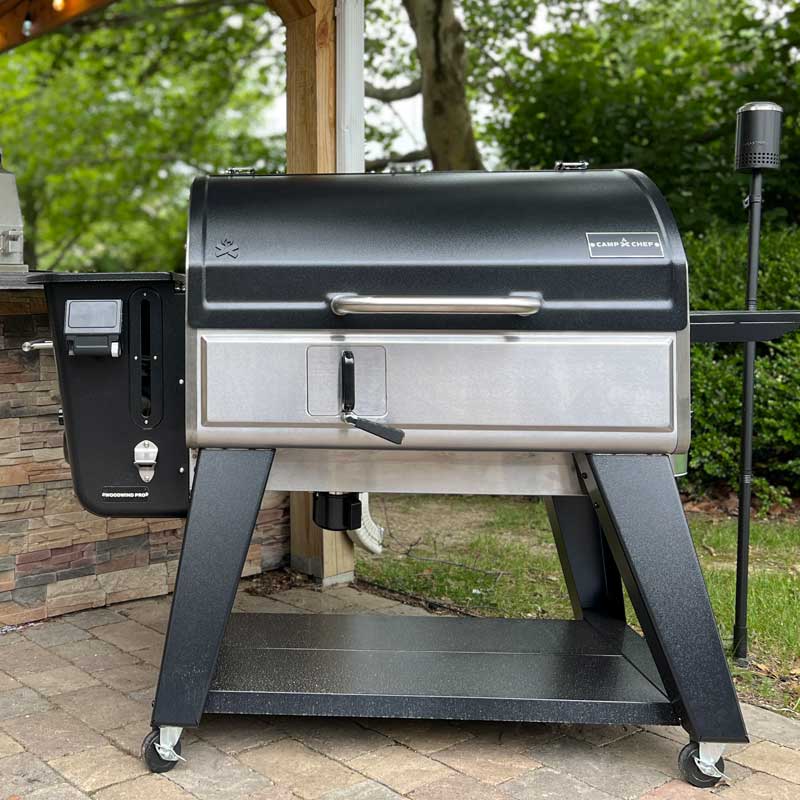
There are some pellet grill models that try to add this ability in, like the Camp Chef Woodwind. It adds a box above the pellet burn cup that you can add wood chunks, charcoal or more pellets. LoneStar Grills uses an auger that allows a mixture of wood chips and pellets for more flavor as well. Do they add more smoke flavor, yes. Is it as strong as a charcoal grill or an offset? Not yet, but I'm sure brands are working on it.
How to use your pellet grill successfully
Discover your hot spots and cool spots
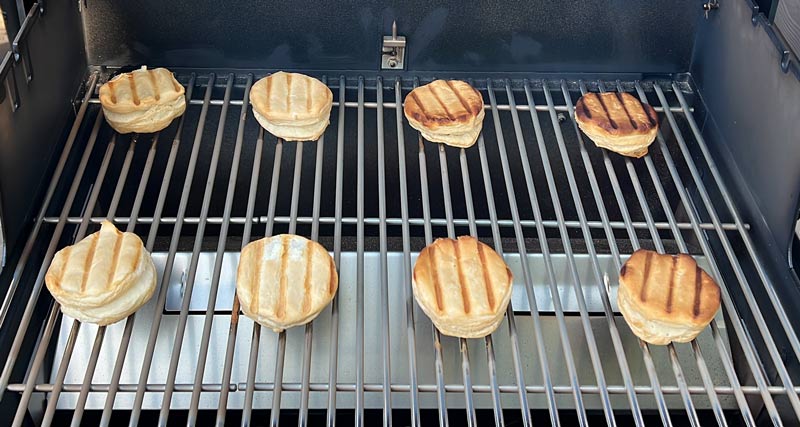
We like to encourage everyone to run the biscuit test on their smoker for their first cook. Just pop open a can of biscuits from the grocery store, place them all around the grate and cook as the label suggests. You'll see very clearly if the grill you've selected has any hot spots to avoid over long cooks.
Leave room for air flow
Pellet grills operate like a convection oven, so you want to be careful not to over-crowd your cooking space. Leave plenty of room for air to circulate around and between your food.
Your first cook
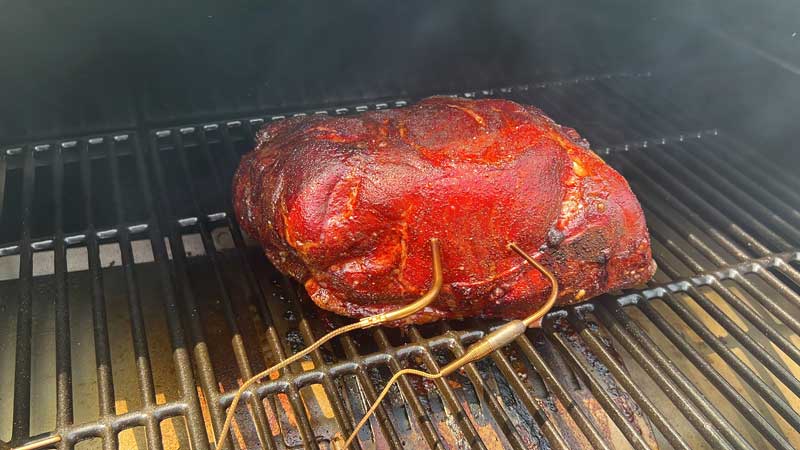
If you're new to smoking meat, I always suggest beginning with a pork butt. Low and slow smoked pulled pork is incredibly forgiving, and I think it's the perfect inaugural cook for any new pellet grill.
For a fast cook with high heat, I suggest bone in, skin on chicken thighs. Again, dark meat is forgiving and difficult to overcook and dry out. Chicken breasts are more prone to drying out, but can be done.
The beef brisket is kind of the holy grail of smoked meats, but I would definitely suggest you get a good feel for your pellet grill and how it works before you take on this more challenging and expensive cut of meat.

Aaj Kal
September 17, 2026 4:28 pmHi,
Just invested big time on a pellet y andnow i am deeply disappointed, when comparing the results to my WSM. I can barely feel the smoke flavor, i have tried using charcoal pellets, smoke tubes. I guess there are plenty of people happy with pellet. My big feedback is to lead with this section and empahsize this difference a bit more.
“How can I get as much smoke flavor as possible?
This is the million dollar question that comes from people who are moving to a pellet grill from a stick burner or a charcoal smoker. Charcoal and wood smokers are capable of HEAVY smoke flavor, almost to a fault, and most pellet grills cannot produce smoke flavor that even comes close.
You can achieve even more smoke flavor by adding wood pellets to a smoking tube in the cooking chamber. You can use a wood chip tray as well, but you’re still not going to get as strong a flavor as charcoal or a stick burner. “