

Buying a smokeless fire pit sounds like a great idea, but there’s a TON that people aren’t telling you about them that you should know before you buy. How they work, how they heat, what surfaces you can put them on and more are all factors to consider, and I’m going to tell it to you straight after testing dozens of smokeless fire pits over the past six years.
Quick Links to the products mentioned in this post:
- Breeo fire pits (Save 5% off your purchase with discount code: BBQLAB5)
- Breeo fire side chairs
- Breeo poker
- Solo Stove fire pits
- Solo Stove fire pit tools
- Solo Stove roasting sticks
- Kindling Cracker
- GrillGun (10% off automatically applied!)
We’ve all been in situations where the reality didn’t match the expectations, so in this video, we’re going to uncover 9 critical things most people don’t realize about smokeless fire pits. Setting the right expectations from the start can make a huge difference in your satisfaction with whatever you purchase.

1- Smokeless doesn’t mean smokeless.
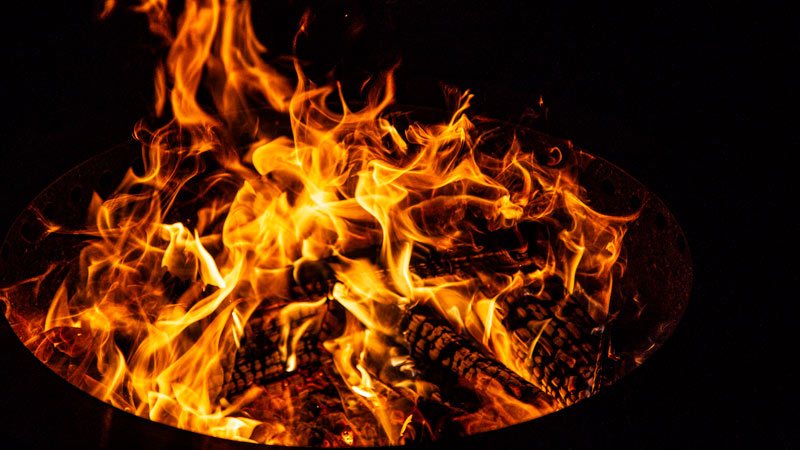
First things first, smokeless doesn’t mean smokeless. It means less smoke.
Companies like Solo Stove and Breeo have based their companies around the idea that a smokeless fire is possible, so let’s look into that. In our testing, (which you can find all over YouTube,) these should indeed be called smokeless fire pits, but I would change the spelling a little bit.
I think “smoke-less” fire pits should be the category because none of them get rid of 100% of the smoke. It’s simply not possible when wood is involved. There will be smoke during the start-up process. There will be smoke when the fire isn’t hot enough. The smokeless feature only works when the fire pit is full of wood, but not too full, the wood is dry, the splits are the right size, and a few other things we’ll cover here in a minute.
Most smokeless fire pits work in roughly the same way, and Breeo illustrates it quite well. Air is fed straight to the fire from holes in an X pattern across the fire pit bottom. Additional vents are letting air inside the double walls of the fire pit, warming that air as it rises through the walls and then shooting that air out at the top of the fire pit to cause a secondary combustion that burns up smoke before it fully exits.

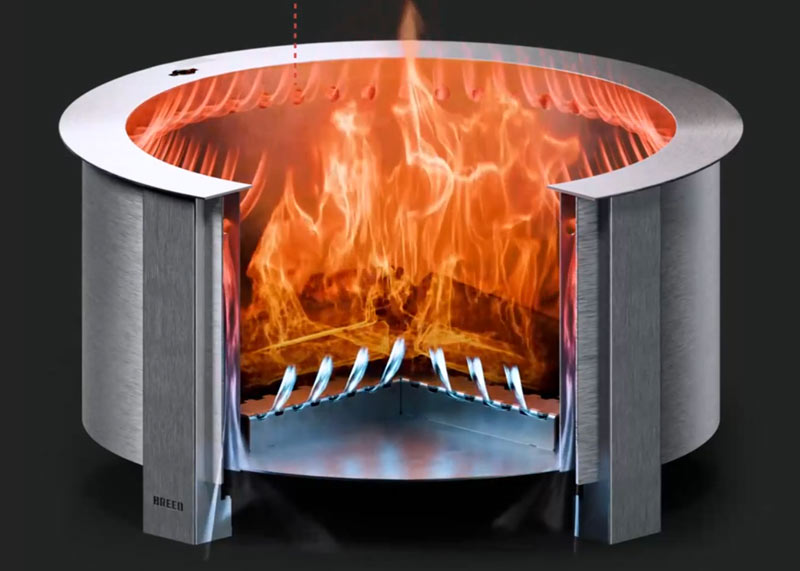
Solo Stove works similarly, but they all work best when the fire pit is fueled correctly and fully engulfed. Anything less than full strength, and smoke can find its way through.
2- Wood matters… a lot.
Hard wood vs. soft wood
Not all firewood is equal. Hard wood is the best type of wood for smokeless fire pits, so that’s wood like Oak, Ash, Hickory, Maple and Birch. Soft woods like Pine, Spruce, Cedar, and Fir trees are not what we’re after. Soft wood burns up faster, turns to ash instead of creating a coal bed and leaves residue from the sap all over the metal.
Seasoned wood
Additionally, you want hardwood that has been seasoned or cut and dried for a few seasons. Most freshly cut wood has around 50% moisture content, and seasoned firewood has 20% or less, so we want less water and more fire. Wet wood will produce smoke no matter what fire pit it’s burning in, smokeless or not.
Wood split size
The size of the firewood also matters; huge log splits make it tough to get started, and you’ll be fighting smoke. We recommend using wood splits that have been cut down to about the diameter of your forearm. Tools like the kindling cracker are perfect for that job.
3- Location, location, location
Remember a minute ago when I explained how the double walls heat the air as it rises? You know what can help that process? Pulling your burning wood to the perimeter of your firepit.
Obviously, you need your wood in the center when starting the fire, but once everything is fully engulfed and burning, use a poker tool to move the fire closer to the walls, and you’ll be surprised what a difference that can make.
Another key trick to a smokeless fire is keeping all of the wood under the top “secondary burn” holes on top of the pit. Anything above that point will smoke, and there isn’t anything the fire pit can do to stop it.

4- Size matters more than you think.
Most people only consider the number of people when choosing a size for their fire pit, but that’s really only half of the equation.
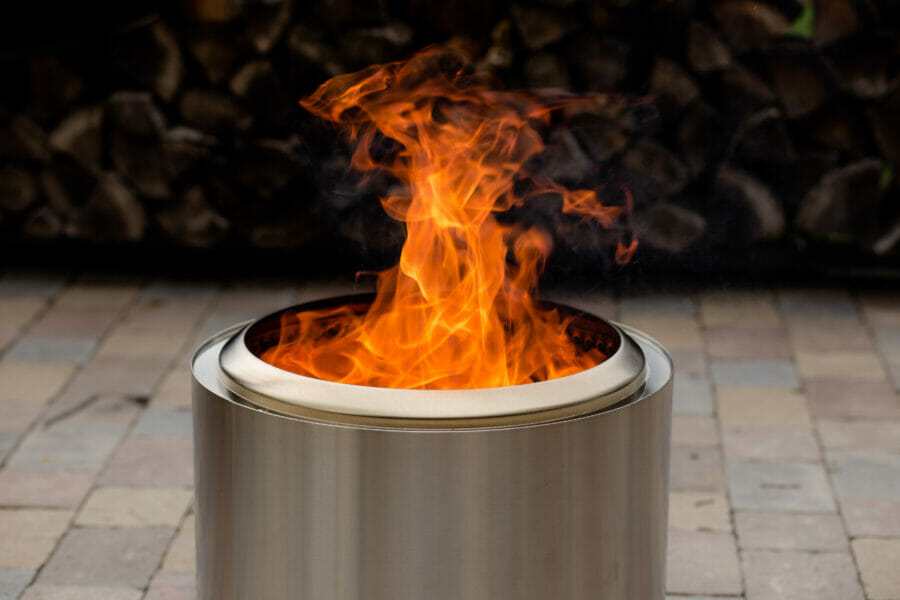
The size of your fire pit will determine how much you spend on fuel every time you go to light it. The bigger the fire pit, the more wood you’ll need for fuel, especially if you want it running hot enough to be smokeless. I usually add wood about every 20 minutes to keep it smokeless, and it’s usually 1-2 wood splits for this 24” model each time.
Both Breeo and Solo Stove make models that can accommodate 10-12 people, but you should understand in advance that it will take a good amount of wood to keep those larger models fed.
5- Rain is a problem.
Let’s talk about how the weather affects how we use our fire pit. Since these run so hot, and we’re using wood splits as fuel, there isn’t really a good way to shut them down if it starts to rain.
You might think you can throw the lid on top to snuff the fire, but they aren’t built for that kind of heat and will warp and discolor. The rain could put out the fire, but that creates another issue.
Since these have small holes in the bottom of the fire pit to allow air in, water mixes with ash and leftover wood particles to fill those holes and once it dries it’s almost like cement to get out again. I do everything I can to keep my fire pit dry and out of the rain, but I also have kids… so that doesn’t always work out.
It’s not game over if it gets wet with ash inside, but a good session with a hose or pressure washer will be needed before lighting it up again if smokeless is your goal.
6- Seat affects heat.
I think it’s important for you to know that how you are, in relation to the fire pit, will determine the heat that you feel. With smokeless fire pits, heat distribution is more vertical than horizontal. If you’re standing around, there is abundant heat in smokeless fire pit design. If you’re seated, that changes things.
Since the design requires a double wall of steel, that air being heated inside those walls takes the heat away from your shins and feet. You can start to feel it again around your knees, but if you’re sitting in something like an Adirondack chair, leaning away from the fire, you will miss most of the heat.
Breeo has come up with a fire pit chair that we really love that positions each person more upright, where the heat actually is, which is perfect. The more reclined you are with a smokeless fire pit, the less heat you’ll encounter.
Breeo and Solo Stove both offer heat deflectors to solve the horizontal distribution issue, and we have a video available where we tested that, if you’re interested.
7- Live-fire cooking is tricky.
I think most of us love a good hot dog or s’more roasted over the fire. With a smokeless pit running smokeless, you might have a hard time cooking over the top.
Since it’s running so hot, marshmallows don’t stand much of a chance. Hot dogs can be charred in mere seconds. With smokeless fire pits, I wouldn’t plan on lighting a fire to immediately cook marshmallows. We like to get the pit going, enjoy the fire, and as it starts to fade, roast our food over the remaining coals.
On that note, both Solo Stove and Breeo have cooking accessories for their fire pits, and we do have a video comparing their two systems, if fire pit cooking is a goal for you.


8- “Safe to use on wood decks”
This claim should be trusted with extreme caution. We get scores of questions every year asking if a certain smokeless fire pit can be used on a wood or Trex-style deck. The answer is complicated, and here’s why:
If a smokeless fire pit brand is saying it can be used on a wood deck, they’re probably referring to the heat buffer directly under the fire pit. They’re saying, “No it won’t leave a burn mark on your deck from getting too hot.” But, with any wood fire pit, we are burning real wood, and wood pops and sparks depending on the moisture content inside each piece of wood.
There’s no way to control where embers will go when wood pops during a burn. With most smokeless fire pits, you can put a spark shield on top that is designed to keep sparks at bay, but they aren’t 100% foolproof. I’ve had wood pop embers through a spark shield and melt a couch cushion or two.
With proper supervision, I feel comfortable putting a smokeless fire pit on top of wood and Trex-style decking. BUT if you plan on lighting it and walking away, I would recommend a gas fire pit instead to be safe.
9- You’re paying extra for an experience.
Smokeless fire pits are typically more expensive than traditional fire pits, but that’s because you’re paying for a fire pit AND a smoke-less experience. Sure, you can buy a traditional fire pit for less, or even make a basic fire pit out of landscape bricks. But there is a large gap in the experience here.
Before we went smokeless, I remember constantly relocating to a different spot depending on how the wind blew, and 30 seconds later moving again when it couldn’t make up its mind. I would often feel relaxed around the crackling fire, ready to turn in, and being forced to end the night with a shower or the bed sheets would smell like smoke until we changed them. I didn’t enjoy either of those scenarios.
When we had a propane fire pit, the flames were always much lower than with wood, and cooking over it was kind of a bummer. I didn’t have to shower afterword, but I also wasn’t getting a full experience of a real fire, and didn’t use it as often as a result.
Smokeless fire pits aren’t a perfect solution, but I will take any of the cons for the pros. We buy a rick of wood at a time, stack it on the patio right by the fire, keep our Kindling Cracker handy and the GrillGun to get it started, and enjoy a fire with the family all evening, where I don’t need to shower when we’re done, and I can head right to sleep. I’ll take that experience every time, and I actually get to spend a little time with my teenagers, devices down, sitting around the fire. That’s priceless to me.
At the end of the day, you’re not really buying a fire pit; you’re investing in future experiences with your friends and family.


What’s the best smokeless fire pit?
We’ve reviewed dozens of different smokeless fire pits over the years, and choosing the right one for you is a personal decision based on the way YOU would use it in your backyard. To help you make that decision, check out the following articles where we share our best fire pit testing:
- Breeo X24 vs Solo Stove Yukon: Which Smokeless Fire Pit is best? … READ MORE
- Comprehensive Solo Stove Review: How To Pick The Right Solo Stove Fire Pit For You… READ MORE
- Best Smokeless Fire Pit of 2026… READ MORE
- Breeo Y Series Fire Pit: Better than the Bonfire? … READ MORE
- Best Fire Pit Accessories For Your Solo Stove… READ MORE
- Solo Stove Bonfire Smokeless Fire Pit Review… READ MORE
- Solo Stove Yukon Smokeless Fire Pit Review… READ MORE
- Is The Solo Stove Canyon Right For Your Backyard? … READ MORE
- Best Propane Fire Pit: Solo Stove Infinity Flame vs. Ninja Fireside 360… READ MORE
Quick Links to the products mentioned in this post:
- Breeo fire pits (Save 5% off your purchase with discount code: BBQLAB5)
- Breeo fire side chairs
- Breeo poker
- Solo Stove fire pits
- Solo Stove fire pit tools
- Solo Stove roasting sticks
- Kindling Cracker
- GrillGun (10% off automatically applied!)

