

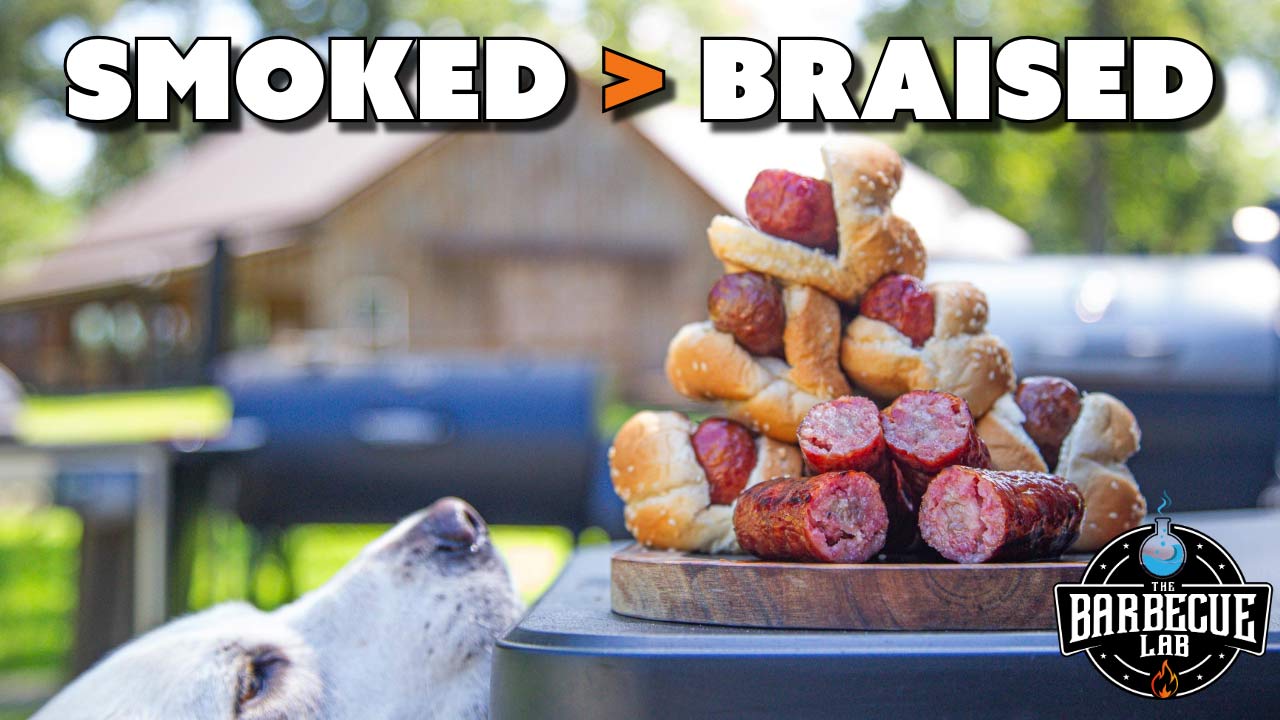
A good smoked brat recipe delivers something a standard grill session never can: a deep, layered smoke flavor wrapped in a casing that snaps when you bite through it. This guide walks you through how to achieve perfectly cooked smoked brats, no matter what type of grill or smoker you’re using.
Quick Links to the products mentioned in this post:
- Cherry wood chips
- Cherry wood pellets
- Stacked cherry wood
- pellet tube
- Grilla Silverbac 2.0
- Weber Performer kettle grill
- Oklahoma Joe’s Longhorn offset
- Napoleon Prestige gas grill
- Thermapen Nano

Smoked Brat Recipe
Equipment
- Smoker
- Charcoal (If using an offset or kettle grill)
- Cherry wood chunks/splits (If using an offset smoker)
- Cherry wood chips (If using a kettle grill)
- Cherry wood pellets (If using a pellet grill or smoking tube)
- Pellet smoking tube (If using a gas grill)
Ingredients
- 6 Bratwurst
- 6 Brat Buns
Instructions
- If cooking in an offset smoker: light a chimney of charcoal and let that sit for 20-30 minutes before dumping it into the firebox. Add chunks of your favorite smoking wood (we use cherry) to the coals. Place the brats on the grates of the cooking chamber. Your target is to keep the temperature between 250-275°F.
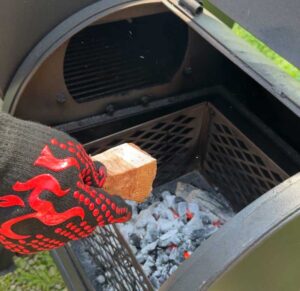
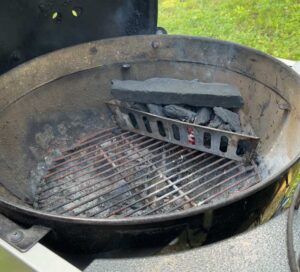
- If cooking in a charcoal kettle grill: set up an indirect fire using a charcoal basket or your favorite alternative method. Once the coals are sufficiently burning, sprinkle a couple handfuls of wood chips over the coals and arrange the brats on the grates opposite the fire. Your target is to keep the temperature between 250-275°F.
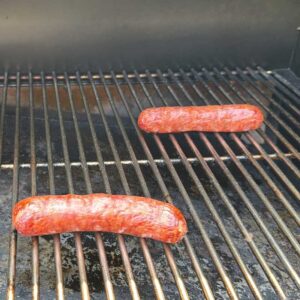
- If cooking in a pellet grill: set the temperature to 275°. Once the grill has reached temperature, place the brats on the grates, being sure they are sufficiently over the heat deflector and not hanging over the edge.
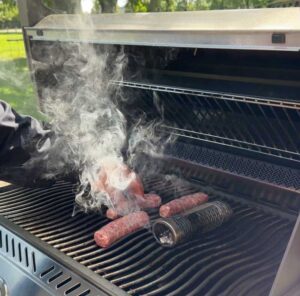
- If cooking in a gas grill: Light the far right burner to high. Fill a pellet smoking tube with wood pellets (we prefer cherry) and light them with a torch. Place the tube directly to the left of the lit burner, but not over it. Let the pellets burn for 8-10 minutes and then blow out the fire. Arrange the brats on the grates to the left of the smoking tube, NOT over a lit burner.
- After 30 minutes, flip and rotate the brats and set a timer for another 20-30 minutes.
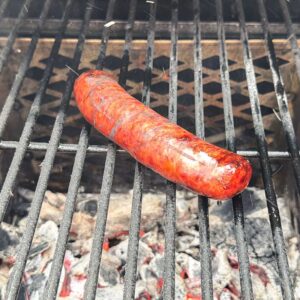
- At this point, the brats should be fully cooked to food-safe temperatures of at least 165°, but now is when you can try to get a little extra color on the outside and crisp up the skins. Carefully move the brats directly over the fire/coals, rotating frequently. This should only take a couple of minutes.


What Are Smoked Brats?
Smoked brats are fresh, uncooked bratwurst sausages cooked low and slow inside a smoker rather than directly over high flames. The cooking process relies on indirect heat and wood smoke to gradually bring the sausage to a safe internal temperature while infusing every bite with a delicious smoke flavor.
Regular brats burst easily when grilled over high heat because rapid fat rendering pressurizes the casing from the inside. Smoking solves this. Gentle heat lets fat render slowly, keeping the casing intact and the meat juicy. Compared to hot dogs-which are typically pre cooked and just need reheating-raw bratwurst requires full cooking to a safe temperature, and smoking is one of the most rewarding ways to get there.
Here’s what makes smoked brats stand out:
- The slow smoke produces a visible smoke ring and wood fired flavor that direct grilling can’t replicate.
- This method works on a pellet smoker, a charcoal grill set up for two-zone cooking, an offset smoker, or even a gas grill when set up properly.
- Typical cook time ranges from 60 to 90 minutes at 225 F to 275 F.
Choosing and Prepping Brats for Smoking
The sausage you start with determines how good your finished product will taste. Selection matters more than any rub or wood choice.
- Choose uncooked bratwurst for better flavor and texture. Use uncooked brats because raw meat absorbs smoke far more effectively than anything already cooked. Avoid pre-cooked brats to retain natural flavors-they’ve already been heat-treated and won’t take on as much smoke.
- The ideal bratwurst has a 70/30 lean-to-fat ratio. That balance gives you enough fat for moisture without greasy results. Bratwurst should be light pink with white fat when raw.
- Select bratwurst with quality proteins and seasonings. Fresh butcher brats made from pork shoulder tend to outperform mass-produced packs. Avoid sausages with injected water or fillers whenever possible.
- Keep brats refrigerated until just before smoking for better smoke absorption. Pull them from the fridge 10–15 minutes before cooking so they’re cold but not icy.
- Avoid puncturing brats to prevent loss of juices during cooking. No fork holes, no knife slits. The casing holds fat and juices inside while smoke penetrates from the outside.
Finishing, Searing, and Serving Smoked Brats
Smoked brats are ready to eat once they hit temperature, but a quick sear takes them from good to great. That last blast of direct heat crisps the casing and adds grill marks that make tasty sausages look as good as they taste.
- Move the brats to a hot zone on your grill or a preheated cast-iron pan for 3 to 5 minutes total, turning to develop an even golden brown color.
- Rest smoked brats for 5 to 10 minutes off the heat. This lets juices redistribute so they don’t flood out when you slice.
- Serve smoked brats on brat buns for best results. If you can’t find brat buns at your store, you can easily find hot dog buns as a backup-just toast them lightly on the upper rack of the grill.
- Top smoked brats with beer onions and sauerkraut. Pair smoked brats with mustard, onions, and sweet peppers. Classic condiment options include whole grain mustard, yellow mustard, spicy brown mustard, caramelized onions, diced raw onions, pickled jalapeños, and vegetables like roasted sweet peppers.
- Serve immediately for the best casing snap and flavor.


